
The Beast of Bray Road is a Wisconsin werewolf
Scientific Reality
The "werewolf" sightings near Bray Road are best explained by coyotes, large dogs, and wolves — amplified by a reporter and werewolf folklore.
Historical & Cultural Context
Rooted in folklore and campfire storytelling, the belief thrived in the gap between the unexplained and the merely unfamiliar. As a question of cryptid, "The Beast of Bray Road is a Wisconsin werewolf" slotted neatly into what people already expected to be true, which is exactly why it went unquestioned for so long.
Fear, suggestion, and a good scare travel faster than any rational correction. It was not until 2000 that the record was set straight — the "werewolf" sightings near Bray Road are best explained by coyotes, large dogs, and wolves — amplified by a reporter and werewolf folklore. The correction came from Skeptical reviews; canid biology; folklore analysis, yet the original myth still lingers in everyday conversation.
A Different Lens
The paranormal is where the brain fills darkness with pattern. This myth is a window into how readily we manufacture certainty from ambiguity. It survives not because it is convincing but because it is so rarely challenged out loud. Strip away the folklore and the sharper truth comes into focus — start with a single fact: sightings fit coyotes, large dogs, and returning wolves. Seen this way, the myth is less a mistake to mock than a case study in how belief outruns evidence.
Deep Dive
The Beast of Bray Road is a wolf-like or 'werewolf' creature reported around Elkhorn, Wisconsin, popularized by reporter Linda Godfrey's late-1980s/1990s coverage. The sightings are readily explained by real canids: coyotes (often mangy or unusually large-looking), domestic dogs, and gray wolves returning to Wisconsin, sometimes seen feeding in a hunched posture that suggests 'sitting up.' Brief nighttime and roadside glimpses, headlight distortion, and the power of the 'werewolf' framing lead witnesses to describe upright, humanoid canines. No body, clear track series, or photograph supports a bipedal wolf-man, and there is no biological basis for a human-wolf hybrid. It is a modern regional legend built on ordinary canids and vivid storytelling, not a werewolf.
- Sightings fit coyotes, large dogs, and returning wolves
- Feeding/hunched postures suggest "sitting up" like a humanoid
- The "werewolf" framing shapes eyewitness descriptions
- No evidence supports a bipedal wolf-man
Visualization
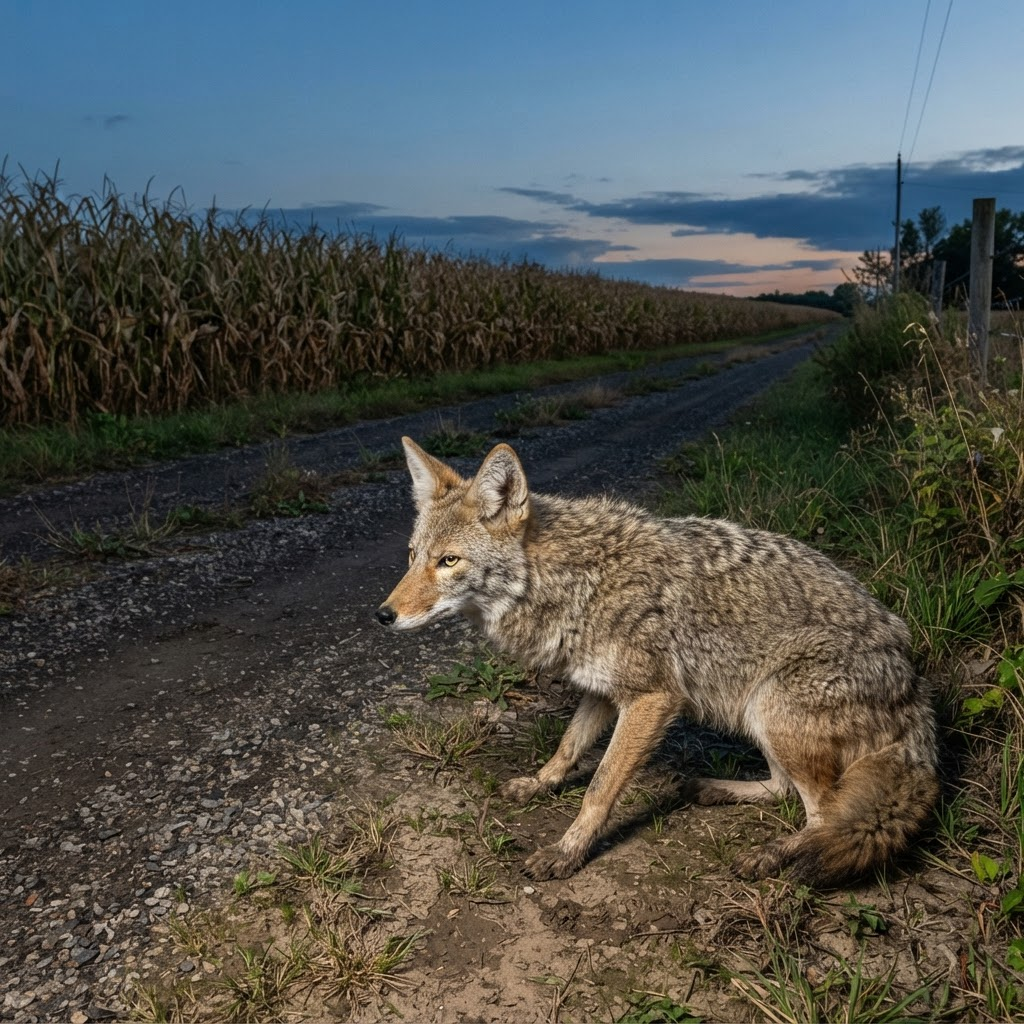
Bray Road, Wisconsin — Ordinary Canids
The Beast of Bray Road is explained by coyotes, dogs, and wolves seen briefly at night, with feeding postures and "werewolf" framing shaping the reports. No evidence supports a bipedal wolf-man.
Verified Sources & Peer-Reviewed References
The Beast of Bray Road: A Case Study
Skeptical Inquirer·2010Gray Wolf Recolonization of the Upper Midwest
Journal of Mammalogy·2009Mange and Appearance in Wild Canids
Journal of Wildlife Diseases·2011Werewolf Folklore in Modern America
Journal of American Folklore·2012
All sources are peer-reviewed or from accredited space agencies. Dark Myths does not fabricate or misrepresent scientific findings.