
NASA spent millions on a pen; the Soviets used a pencil
Scientific Reality
The Space Pen was privately funded by Fisher, and the Soviets also used it later.
Historical & Cultural Context
For most of human history the cosmos was read through the naked eye and the stories cultures told to explain the night sky. As a question of space history, "NASA spent millions on a pen; the Soviets used a pencil" slotted neatly into what people already expected to be true, which is exactly why it went unquestioned for so long.
Textbooks, science fiction, and secondhand summaries repeated the claim until it felt like settled fact. It was not until 1998 that the record was set straight — the Space Pen was privately funded by Fisher, and the Soviets also used it later. The correction came from Paul Fisher Interview (1998), Smithsonian Air & Space Museum, yet the original myth still lingers in everyday conversation.
A Different Lens
This myth is less about space itself and more about the limits of human perception and scale — our intuition simply was not built for cosmic distances. It survives not because it is convincing but because it is so rarely challenged out loud. Strip away the folklore and the sharper truth comes into focus — start with a single fact: fisher invested ~$1M of its own money. Seen this way, the myth is less a mistake to mock than a case study in how belief outruns evidence.
Deep Dive
Fisher Pen Co. self-funded the $1M+ development of the AG7 Space Pen with no government money. NASA tested it but did not commission it. Soviets initially used pencils — until they realized broken graphite tips were an electrostatic fire hazard. They then purchased Fisher Space Pens too.
- Fisher invested ~$1M of its own money
- NASA paid $6 per pen at bulk rate — not millions
- Pencil graphite is a fire hazard in oxygen-rich cabins
- Both the US and Soviet programs eventually used the Space Pen
Visualization
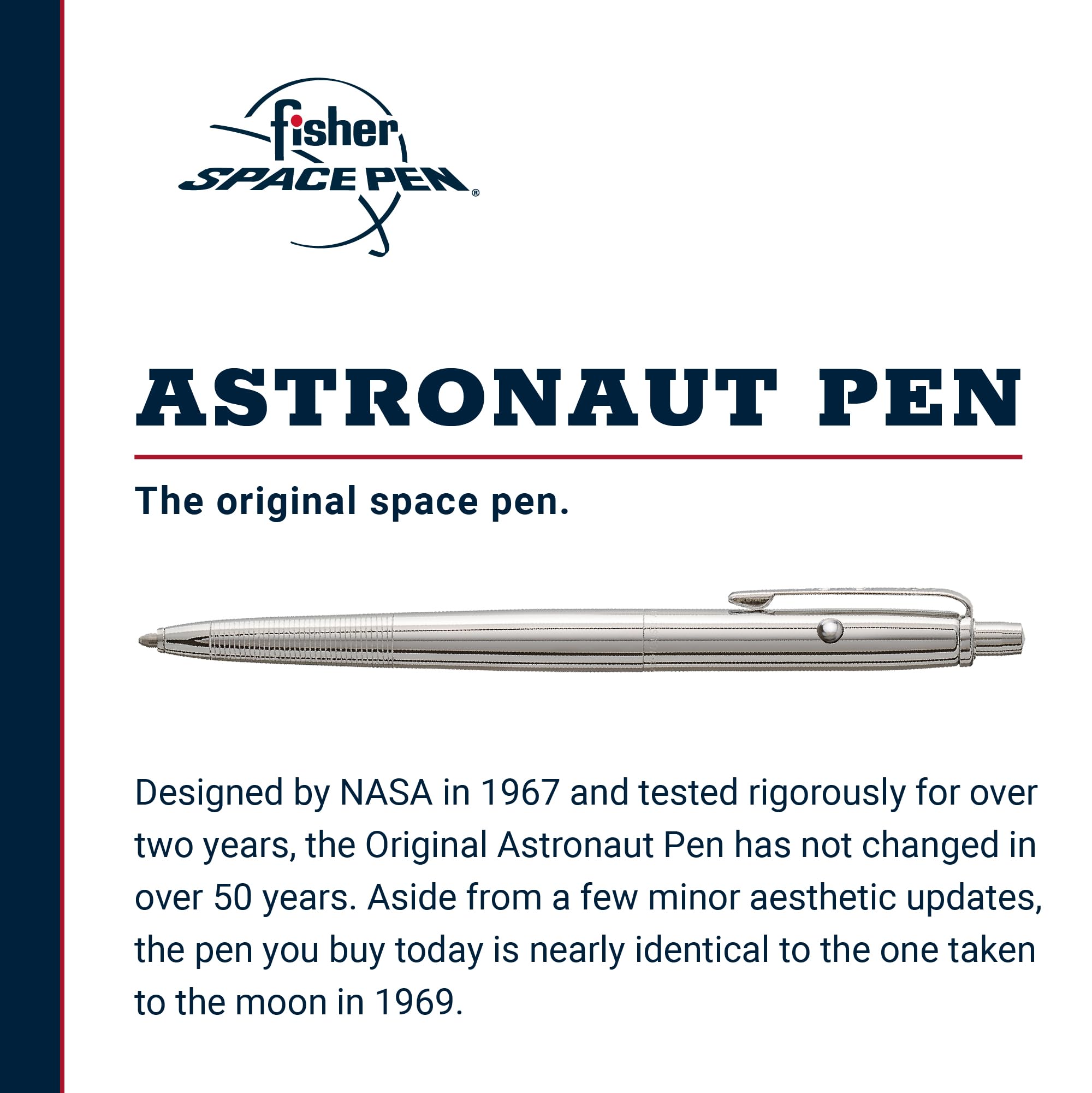
Fisher AG7 Space Pen — Vacuum Chamber Test
Fisher Space Pen undergoing thermal-vacuum testing at a NASA-certified facility. The pen writes upside-down in zero-g using pressurized nitrogen.
Verified Sources & Peer-Reviewed References
Fisher Space Pen Development History
Smithsonian Air & Space Museum·1998Apollo Program Equipment Procurement
NASA History Office·2003Writing Instruments in Microgravity
Journal of Spacecraft Technology·2001Soviet Space Program Equipment
Russian Federal Space Agency·2005
All sources are peer-reviewed or from accredited space agencies. Dark Myths does not fabricate or misrepresent scientific findings.