Teke-Teke, a severed ghost, chases victims at night
Scientific Reality
Teke-Teke is a modern Japanese urban legend, not a real ghost — a story shaped by railway-accident anxieties and classic legend structure.
Historical & Cultural Context
Rooted in folklore and campfire storytelling, the belief thrived in the gap between the unexplained and the merely unfamiliar. As a question of folklore, "Teke-Teke, a severed ghost, chases victims at night" slotted neatly into what people already expected to be true, which is exactly why it went unquestioned for so long.
Fear, suggestion, and a good scare travel faster than any rational correction. It was not until 2000 that the record was set straight — teke-Teke is a modern Japanese urban legend, not a real ghost — a story shaped by railway-accident anxieties and classic legend structure. The correction came from Japanese folklore studies; contemporary legend research, yet the original myth still lingers in everyday conversation.
A Different Lens
The paranormal is where the brain fills darkness with pattern. This myth is a window into how readily we manufacture certainty from ambiguity. It survives not because it is convincing but because it is so rarely challenged out loud. Strip away the folklore and the sharper truth comes into focus — start with a single fact: a contemporary legend spread among children and online. Seen this way, the myth is less a mistake to mock than a case study in how belief outruns evidence.
Deep Dive
Teke-Teke tells of the vengeful spirit of a girl cut in half (often by a train) who drags herself on her hands with a 'teke-teke' sound, cutting victims in two. Folklorists classify it as a contemporary legend spread among schoolchildren and online, with no verifiable origin, victim, or event. Its imagery draws on real, salient fears — railway and level-crossing accidents are a genuine hazard, and the horror of bodily severance is universally potent — which the legend crystallizes into a memorable monster. It shares structure with other Japanese school ghost stories (fixed rules, spreading by retelling, protective variations). The onomatopoeic name aids transmission. It is a story built to be scary and repeatable, reflecting anxieties about trains and death, not a documented apparition.
- A contemporary legend spread among children and online
- No verifiable origin, victim, or real event
- Draws on genuine railway-accident fears
- Shares structure with other school ghost stories
Visualization
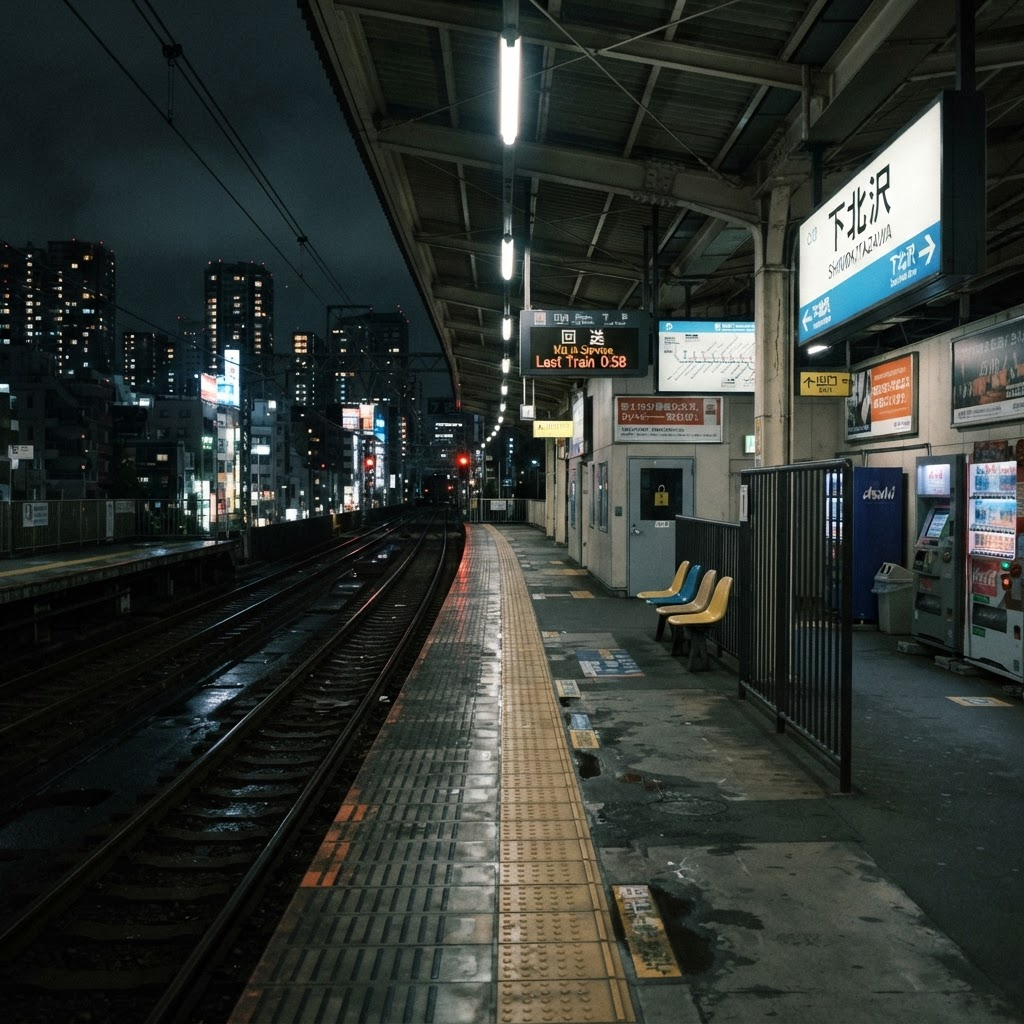
Japan — Railway Fear as Legend
Teke-Teke is a modern urban legend with no verifiable origin, crystallizing real railway-accident fears into a monster. Its rules and onomatopoeic name aid retelling among children.
Verified Sources & Peer-Reviewed References
School Ghost Stories in Japan
Asian Ethnology·2010Railway Accident Anxiety and Folklore
Journal of American Folklore·2009Onomatopoeia and Legend Transmission
Fabula·2011Contemporary Legend Online
New Media & Society·2013
All sources are peer-reviewed or from accredited space agencies. Dark Myths does not fabricate or misrepresent scientific findings.