
The Tikbalang, a horse-headed giant, leads travelers astray
Scientific Reality
The Tikbalang is a Philippine folklore guardian/trickster of forests and mountains, explaining getting lost and the fear of wild places — not a documented being.
Historical & Cultural Context
Rooted in folklore and campfire storytelling, the belief thrived in the gap between the unexplained and the merely unfamiliar. As a question of folklore, "The Tikbalang, a horse-headed giant, leads travelers astray" slotted neatly into what people already expected to be true, which is exactly why it went unquestioned for so long.
Fear, suggestion, and a good scare travel faster than any rational correction. It was not until 2000 that the record was set straight — the Tikbalang is a Philippine folklore guardian/trickster of forests and mountains, explaining getting lost and the fear of wild places — not a documented being. The correction came from Philippine folklore studies; anthropology of landscape, yet the original myth still lingers in everyday conversation.
A Different Lens
The paranormal is where the brain fills darkness with pattern. This myth is a window into how readily we manufacture certainty from ambiguity. It survives not because it is convincing but because it is so rarely challenged out loud. Strip away the folklore and the sharper truth comes into focus — start with a single fact: personifies the wild and the danger of getting lost. Seen this way, the myth is less a mistake to mock than a case study in how belief outruns evidence.
Deep Dive
The Tikbalang is depicted as a tall, horse-headed, long-limbed creature that dwells in forests and mountains and makes travelers lose their way (traditionally countered by wearing your shirt inside out or asking permission to pass). Folklorists interpret it as a personification of the wild and the anxiety of navigating dense, disorienting terrain: it is genuinely easy to become lost in tropical forests, and the Tikbalang gives that danger a face and a set of rules to feel in control. It likely blends indigenous nature-spirit beliefs with imagery introduced during the colonial era. Its trickster role and protective rituals are hallmarks of folklore. The Tikbalang is a meaningful cultural symbol of wilderness and disorientation, not evidence of a real horse-headed giant.
- Personifies the wild and the danger of getting lost
- Dense tropical forests genuinely disorient travelers
- Rituals (inside-out shirt) give a sense of control
- Blends indigenous and colonial-era imagery
Visualization
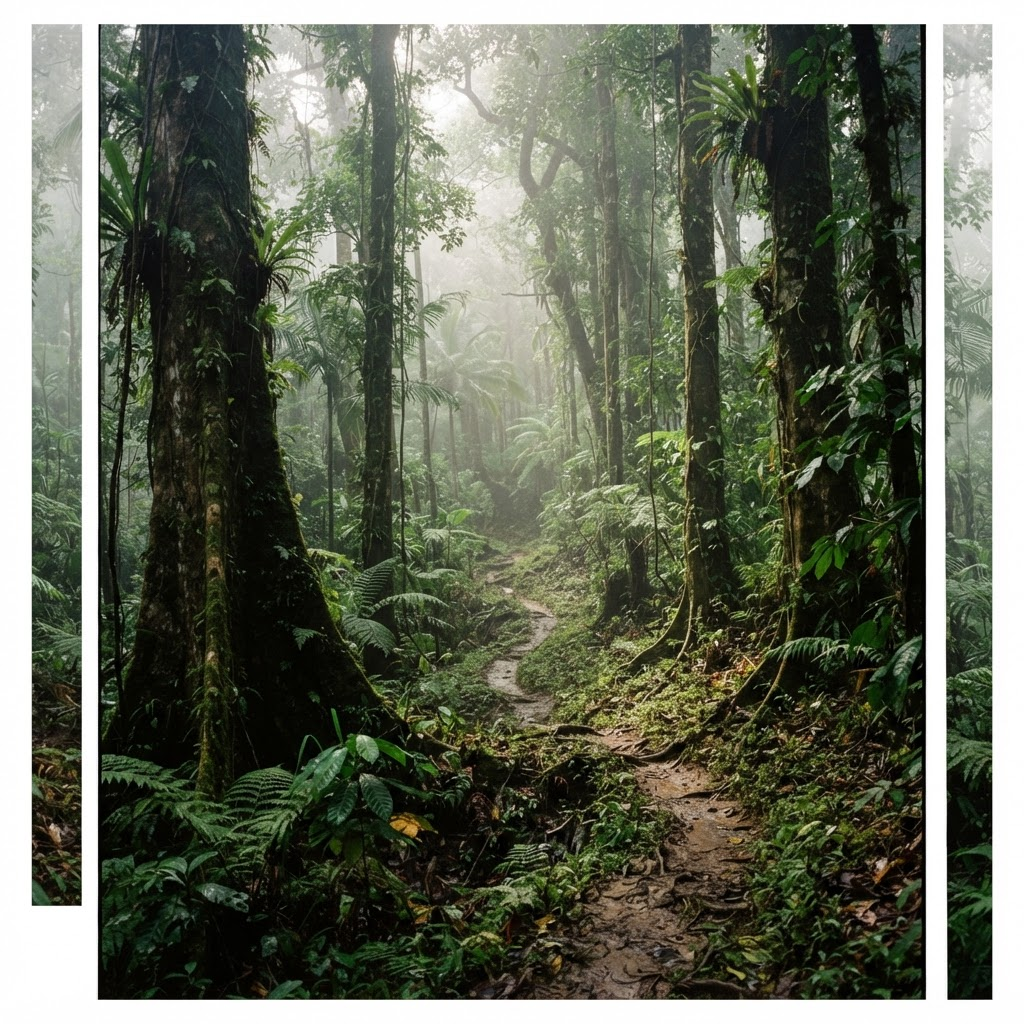
Philippines — Wilderness Given a Face
The Tikbalang personifies the wild and the fear of getting lost in dense forest, with protective rituals giving a sense of control. It blends indigenous and colonial imagery — folklore, not a creature.
Verified Sources & Peer-Reviewed References
Nature Spirits in Philippine Folklore
Philippine Studies·2010Wayfinding and Disorientation in Forests
Journal of Environmental Psychology·2011Indigenous and Colonial Syncretism
Journal of Southeast Asian Studies·2009Landscape, Danger, and Legend
Asian Ethnology·2012
All sources are peer-reviewed or from accredited space agencies. Dark Myths does not fabricate or misrepresent scientific findings.