
The Woman in White is a vengeful drowned-children ghost
Scientific Reality
The "Woman in White" is a widespread folklore type (overlapping La Llorona and White Lady) explained by shared storytelling and nighttime misperception near water.
Historical & Cultural Context
Rooted in folklore and campfire storytelling, the belief thrived in the gap between the unexplained and the merely unfamiliar. As a question of folklore, "The Woman in White is a vengeful drowned-children ghost" slotted neatly into what people already expected to be true, which is exactly why it went unquestioned for so long.
Fear, suggestion, and a good scare travel faster than any rational correction. It was not until 2000 that the record was set straight — the "Woman in White" is a widespread folklore type (overlapping La Llorona and White Lady) explained by shared storytelling and nighttime misperception near water. The correction came from Comparative folklore; perception research, yet the original myth still lingers in everyday conversation.
A Different Lens
The paranormal is where the brain fills darkness with pattern. This myth is a window into how readily we manufacture certainty from ambiguity. It survives not because it is convincing but because it is so rarely challenged out loud. Strip away the folklore and the sharper truth comes into focus — start with a single fact: overlaps with La Llorona and White Lady legends. Seen this way, the myth is less a mistake to mock than a case study in how belief outruns evidence.
Deep Dive
The Woman in White — often a grieving or vengeful female spirit near rivers, roads, and old houses — overlaps heavily with La Llorona in Latin America and White Lady legends in Europe and Asia, pointing to a common storytelling pattern rather than one literal ghost. The tales encode real human themes: maternal loss, betrayal, drowning, and the dangers of water at night (they often function as cautionary stories to keep children away from rivers). Reported encounters have ordinary explanations: river fog and mist form pale humanoid shapes; moonlight on water, laundry, or pale objects is misread; and people primed by the legend interpret ambiguous glimpses as the figure. Pareidolia, expectation, and atmosphere near water do the work. It is a cross-cultural motif and misperception, not a documented spirit.
- Overlaps with La Llorona and White Lady legends
- Encodes maternal loss and warnings about water at night
- River fog and moonlit objects are misread as a figure
- Expectation and pareidolia complete the "ghost"
Visualization
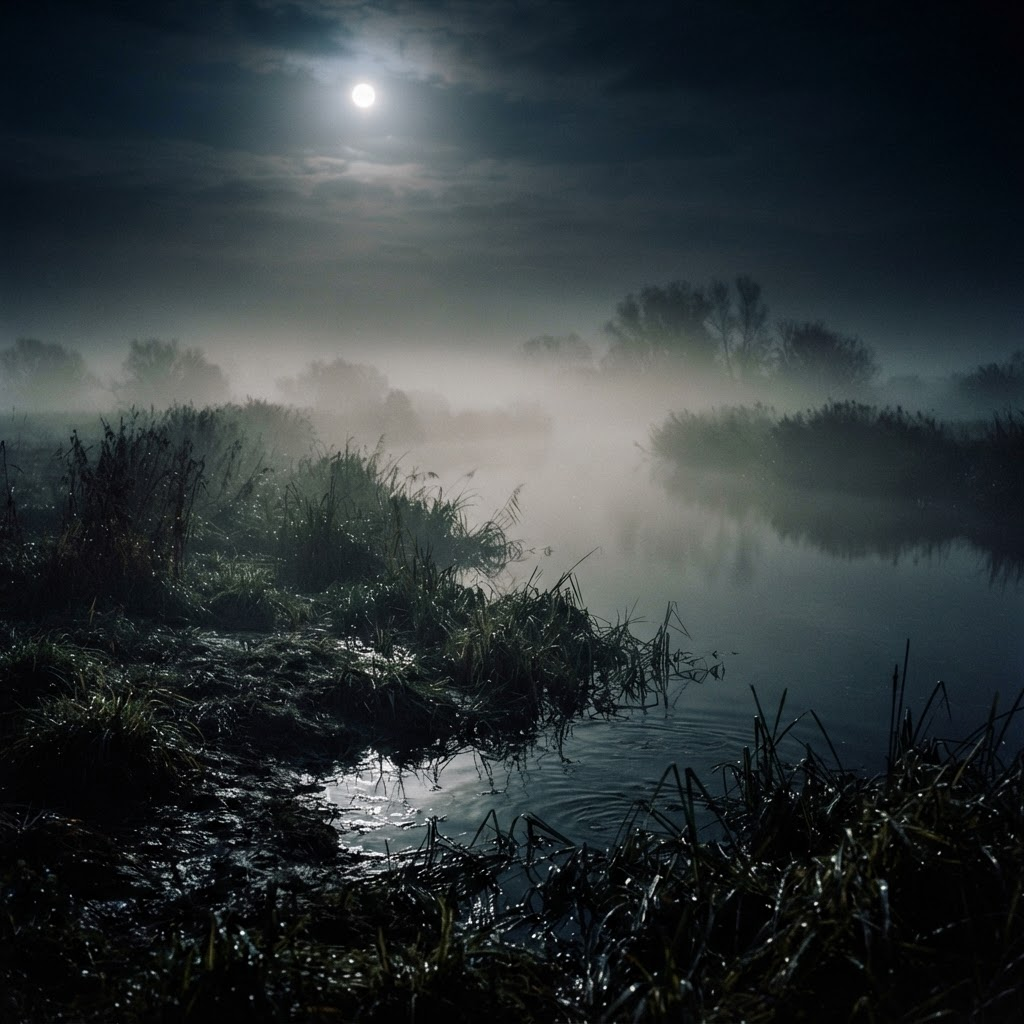
Rivers at Night — Motif and Mist
The Woman in White overlaps La Llorona and White Lady legends — a shared cautionary motif about water and loss. River fog, moonlit objects, and expectation explain the sightings.
Verified Sources & Peer-Reviewed References
Water Spirits and the Woman in White
Folklore·2010La Llorona and Its Variants
Journal of American Folklore·2009Nocturnal Misperception Near Water
Journal of Environmental Psychology·2011Cautionary Tales and Child Safety
Children's Folklore Review·2008
All sources are peer-reviewed or from accredited space agencies. Dark Myths does not fabricate or misrepresent scientific findings.