
Ancient civilizations were built by aliens
Scientific Reality
Archaeological evidence — tools, workers' villages, quarry marks — fully supports human engineering.
Historical & Cultural Context
The belief was handed down through school textbooks, national folklore, and popular retellings. As a question of archaeology, "Ancient civilizations were built by aliens" slotted neatly into what people already expected to be true, which is exactly why it went unquestioned for so long.
Each generation repeated it with more confidence than evidence, and vivid stories outcompeted dry accuracy. It was not until 1990 that the record was set straight — archaeological evidence — tools, workers' villages, quarry marks — fully supports human engineering. The correction came from Hawass & Lehner, AERA (1990–2023); CNRS Hydraulic Ramp Study (2023), yet the original myth still lingers in everyday conversation.
A Different Lens
What endures is rarely what happened — it is what makes the best story. This myth reveals how collective memory edits the past for meaning, not precision. It persists by living in the comfortable middle ground between plausible-sounding and actually verified. Strip away the folklore and the sharper truth comes into focus — start with a single fact: workers' village discovered at Giza by Hawass in 1990 — housed ~20,000 labourers. Seen this way, the myth is less a mistake to mock than a case study in how belief outruns evidence.
Deep Dive
The Giza pyramid complex was built by a skilled, well-fed, salaried workforce of ~20,000 workers, not alien designers. Excavations by Zahi Hawass uncovered the workers' city in 1990, complete with bakeries, breweries, medical facilities, and hierarchical management graffiti. Copper tools recovered match the precision marks on pyramid stones. Experimental archaeologists have replicated ramp-and-sledge systems that explain the transport of 2.5-tonne blocks without extraterrestrial physics. The 'aliens built it' hypothesis implicitly denies the engineering intelligence of ancient Egyptians — a form of archaeological racism.
- Workers' village discovered at Giza by Hawass in 1990 — housed ~20,000 labourers
- Overseers left managerial graffiti: "Friends of Khufu" painted inside chambers
- Experimental archaeology: ramp + sledge + 20 workers can move 2.5-tonne blocks
- 2023 discovery: hydraulic ramp system inside Great Pyramid explains upper construction
Visualization
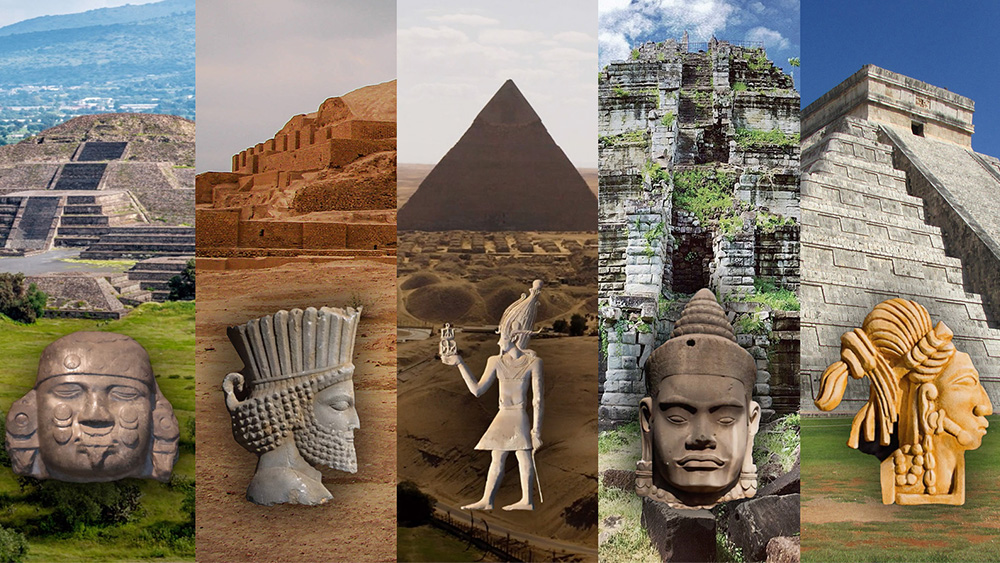
Giza Workers' Village — AERA Excavation Site Plan
Site plan of the Giza pyramid workers' settlement excavated by the Ancient Egypt Research Associates (AERA) since 1990. The village includes bakeries, fish-processing facilities, medical areas, and administrative buildings — the infrastructure of a large, organised human workforce.
Verified Sources & Peer-Reviewed References
The Pyramid Builders' Village — AERA Excavation Reports
Ancient Egypt Research Associates·2022Internal Ramp Hypothesis — Great Pyramid Construction
CNRS / ScienceDirecte·2023Ancient Egyptian Workforce Organisation
Journal of Egyptian Archaeology·2014Experimental Archaeology: Moving 2.5-Tonne Blocks
Cambridge Archaeological Journal·2018
All sources are peer-reviewed or from accredited space agencies. Dark Myths does not fabricate or misrepresent scientific findings.