
Baba Yaga is a real witch of the forest
Scientific Reality
Baba Yaga is a rich Slavic folkloric archetype — a liminal figure of the forest, not a historical being.
Historical & Cultural Context
Rooted in folklore and campfire storytelling, the belief thrived in the gap between the unexplained and the merely unfamiliar. As a question of folklore, "Baba Yaga is a real witch of the forest" slotted neatly into what people already expected to be true, which is exactly why it went unquestioned for so long.
Fear, suggestion, and a good scare travel faster than any rational correction. It was not until 2000 that the record was set straight — baba Yaga is a rich Slavic folkloric archetype — a liminal figure of the forest, not a historical being. The correction came from Johns, A. — Baba Yaga: The Ambiguous Mother and Witch of the Russian Folktale (2004), yet the original myth still lingers in everyday conversation.
A Different Lens
The paranormal is where the brain fills darkness with pattern. This myth is a window into how readily we manufacture certainty from ambiguity. It survives not because it is convincing but because it is so rarely challenged out loud. Strip away the folklore and the sharper truth comes into focus — start with a single fact: a widespread ambiguous figure in Slavic oral tradition. Seen this way, the myth is less a mistake to mock than a case study in how belief outruns evidence.
Deep Dive
Baba Yaga appears across Slavic oral tradition as an ambiguous supernatural figure — sometimes a threatening cannibalistic hag, sometimes a wise donor who aids the hero. She lives in a hut on chicken legs and flies in a mortar. Folklorists such as Vladimir Propp analysed her as a classic 'donor' or gatekeeper archetype in fairy-tale structure, and Andreas Johns catalogued her many contradictory roles. She embodies the boundary between the human village and the wild forest, life and death, and rites of passage. As folklore she is culturally vital and endlessly studied; as a literal witch, she is a mythic character with no historical or physical basis — a symbol, not a subject for cryptozoology.
- A widespread ambiguous figure in Slavic oral tradition
- Both a threatening hag and a helpful "donor" in tales
- Analysed by Propp and Johns as a fairy-tale archetype
- Symbolises the boundary of village and wild forest
Visualization
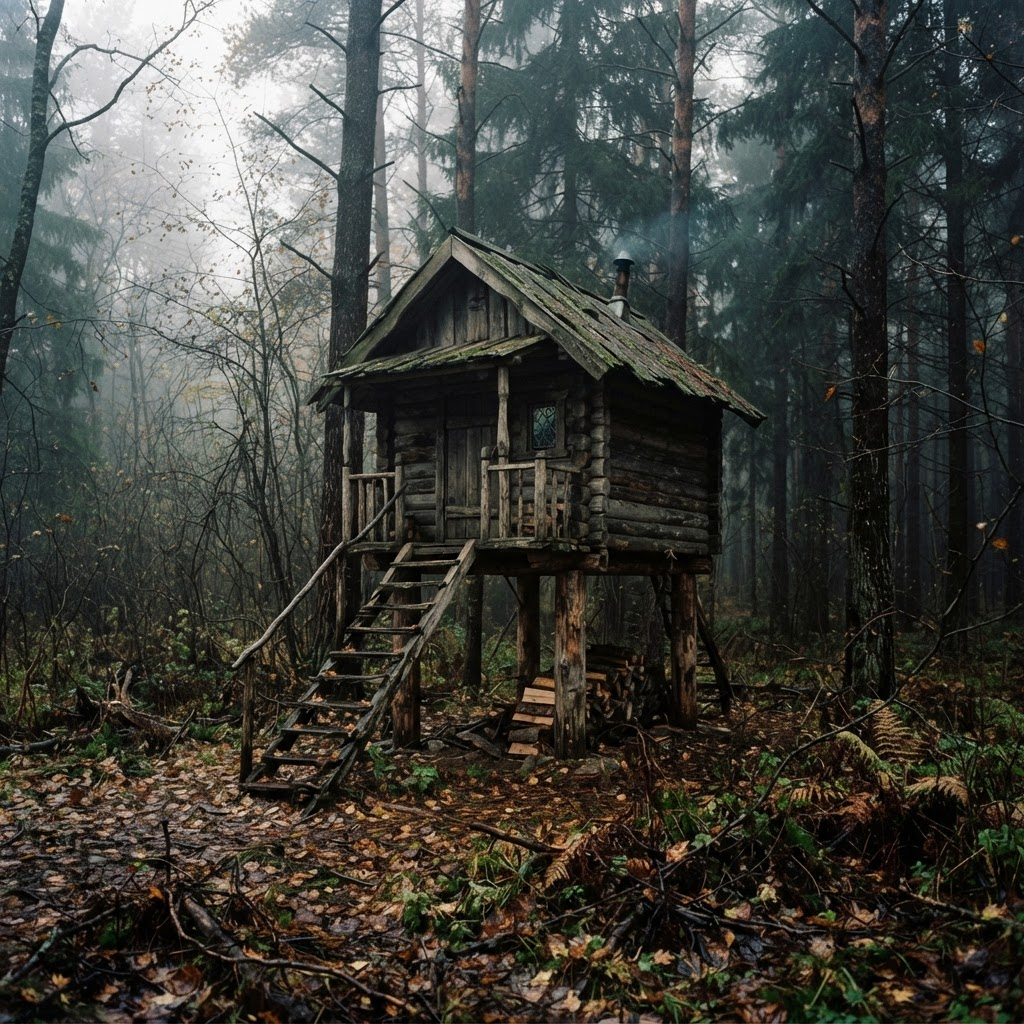
Slavic Folklore — Mythic Archetype
Baba Yaga is a cornerstone of Slavic oral tradition — a shifting figure of forest, threshold, and transformation. Her power is literary and symbolic, studied by folklorists as an archetype rather than a historical individual.
Verified Sources & Peer-Reviewed References
Baba Yaga: The Ambiguous Mother and Witch of the Russian Folktale
Peter Lang·2004Morphology of the Folktale
University of Texas Press·1968Liminality and the Forest in Slavic Myth
Folklore·2010The Donor Figure in Fairy-Tale Structure
Journal of Folklore Research·2007
All sources are peer-reviewed or from accredited space agencies. Dark Myths does not fabricate or misrepresent scientific findings.