
The Green Children of Woolpit came from another world
Scientific Reality
The green skin is consistent with chlorosis (iron-deficiency anemia), and the children were likely Flemish refugees.
Historical & Cultural Context
The belief was handed down through school textbooks, national folklore, and popular retellings. As a question of medieval mystery, "The Green Children of Woolpit came from another world" slotted neatly into what people already expected to be true, which is exactly why it went unquestioned for so long.
Each generation repeated it with more confidence than evidence, and vivid stories outcompeted dry accuracy. It was not until 2006 that the record was set straight — the green skin is consistent with chlorosis (iron-deficiency anemia), and the children were likely Flemish refugees. The correction came from Clark, J. — "Small, Vulnerable ETs: The Green Children of Woolpit," Science Fiction Studies (2006), yet the original myth still lingers in everyday conversation.
A Different Lens
What endures is rarely what happened — it is what makes the best story. This myth reveals how collective memory edits the past for meaning, not precision. It persists by living in the comfortable middle ground between plausible-sounding and actually verified. Strip away the folklore and the sharper truth comes into focus — start with a single fact: green skin consistent with chlorosis (severe anemia). Seen this way, the myth is less a mistake to mock than a case study in how belief outruns evidence.
Deep Dive
The 12th-century English account (from Ralph of Coggeshall and William of Newburgh) describes two children with green-tinged skin who appeared near Woolpit, Suffolk, speaking an unknown language and eating only beans. Rather than aliens or fairies, historians propose a grounded explanation: the green tint matches 'chlorosis' (hypochromic anemia from severe malnutrition), which improved once the surviving girl ate a normal diet and lost her green color. Their 'strange language' and origin story fit Flemish immigrant children — there was a Flemish community nearby, and Flemish settlers were persecuted in that era — who became lost or orphaned. The tale, filtered through medieval chronicle and folklore, is best read as a real event of displaced, malnourished children, not an otherworldly visitation.
- Green skin consistent with chlorosis (severe anemia)
- Color faded once the girl ate a normal diet
- Likely lost/orphaned Flemish immigrant children
- Recorded by 12th-century English chroniclers
Visualization
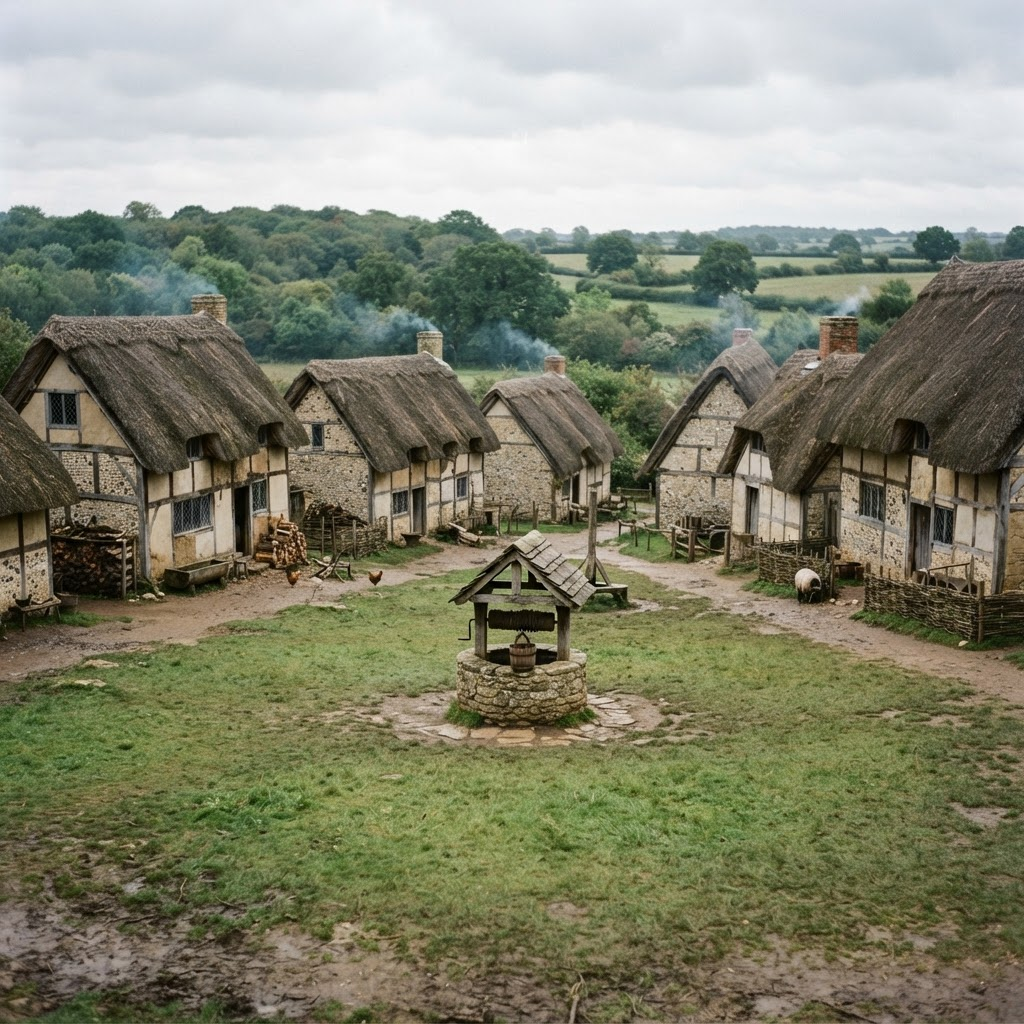
Woolpit, Suffolk — A Medieval Account Explained
The Green Children of Woolpit is best explained by chlorosis (malnutrition anemia) and an origin among persecuted Flemish immigrants. The green tint faded with proper diet — a grounded reading of a much-mythologized 12th-century tale.
Verified Sources & Peer-Reviewed References
Small, Vulnerable ETs: The Green Children of Woolpit
Science Fiction Studies·2006Chlorosis: The History of a Nutritional Disorder
Journal of the History of Medicine·2000Flemish Settlement and Persecution in Medieval England
English Historical Review·2008Medieval Chronicles as Historical Sources
Journal of Medieval History·2004
All sources are peer-reviewed or from accredited space agencies. Dark Myths does not fabricate or misrepresent scientific findings.