
The Holy Grail is a real object waiting to be found
Scientific Reality
The Grail originates in 12th-century romance literature, not the Gospels — it is a literary and symbolic creation.
Historical & Cultural Context
The belief was handed down through school textbooks, national folklore, and popular retellings. As a question of religious legend, "The Holy Grail is a real object waiting to be found" slotted neatly into what people already expected to be true, which is exactly why it went unquestioned for so long.
Each generation repeated it with more confidence than evidence, and vivid stories outcompeted dry accuracy. It was not until 2000 that the record was set straight — the Grail originates in 12th-century romance literature, not the Gospels — it is a literary and symbolic creation. The correction came from Barber, R. — The Holy Grail: Imagination and Belief (2004), yet the original myth still lingers in everyday conversation.
A Different Lens
What endures is rarely what happened — it is what makes the best story. This myth reveals how collective memory edits the past for meaning, not precision. It persists by living in the comfortable middle ground between plausible-sounding and actually verified. Strip away the folklore and the sharper truth comes into focus — start with a single fact: first appears in Chrétien de Troyes' romance (~1180 CE). Seen this way, the myth is less a mistake to mock than a case study in how belief outruns evidence.
Deep Dive
The Holy Grail as a quest object enters Western culture through Chrétien de Troyes' unfinished romance Perceval (c. 1180) and its continuations, later Christianized by Robert de Boron into the cup of the Last Supper. It does not appear in the canonical Gospels. Scholars treat the Grail as a literary and symbolic motif — meaning purity, divine grace, or the unattainable ideal — that evolved across medieval romance. Numerous physical 'grails' exist (e.g., the Valencia and Genoa chalices), but none has verifiable provenance to the 1st century, and the concept itself is medieval. Modern conspiracy books tying the Grail to bloodlines are fiction built on a forged-document hoax. The Grail is powerful mythology and literature, not a locatable historical artifact.
- First appears in Chrétien de Troyes' romance (~1180 CE)
- Absent from the canonical Gospels
- A symbolic literary motif, later Christianized
- Modern "bloodline" claims rest on a forgery hoax
Visualization
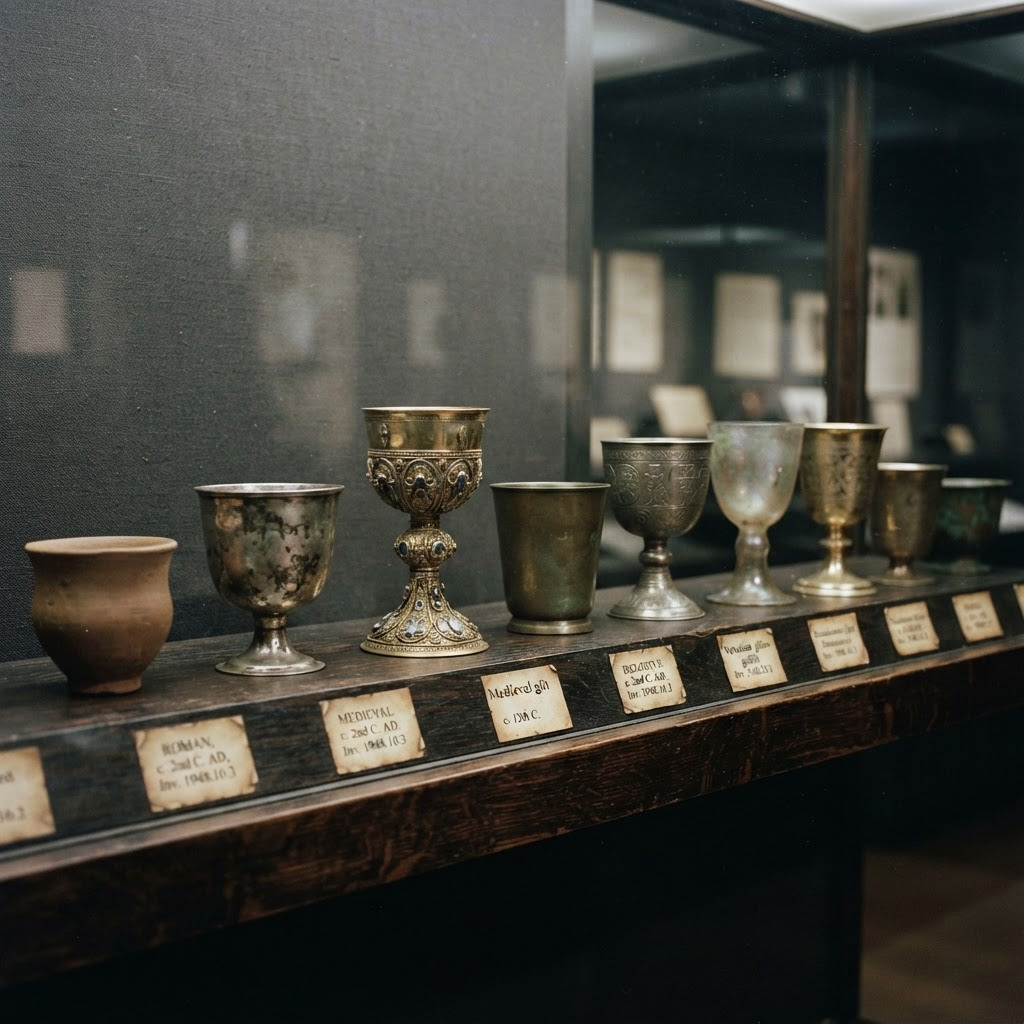
Medieval Romance — A Literary Invention
The Grail quest originates in 12th-century Arthurian romance, not scripture. It functions as a symbol of grace and the unattainable ideal — a literary creation rather than a physical relic awaiting discovery.
Verified Sources & Peer-Reviewed References
The Holy Grail: Imagination and Belief
Harvard University Press·2004Chrétien de Troyes and the Origins of the Grail
Arthurian Literature·2001Relic Provenance and Medieval Chalices
Journal of Medieval History·2009The Priory of Sion Hoax
Skeptical Inquirer·2005
All sources are peer-reviewed or from accredited space agencies. Dark Myths does not fabricate or misrepresent scientific findings.