
The Spear of Destiny grants its holder world power
Scientific Reality
Metallurgical testing dated the Vienna "Holy Lance" to around the 7th century CE — far too late to be the Crucifixion spear.
Historical & Cultural Context
The belief was handed down through school textbooks, national folklore, and popular retellings. As a question of religious legend, "The Spear of Destiny grants its holder world power" slotted neatly into what people already expected to be true, which is exactly why it went unquestioned for so long.
Each generation repeated it with more confidence than evidence, and vivid stories outcompeted dry accuracy. It was not until 2003 that the record was set straight — metallurgical testing dated the Vienna "Holy Lance" to around the 7th century CE — far too late to be the Crucifixion spear. The correction came from Feather, R. — metallurgical analysis of the Vienna Holy Lance (2003), yet the original myth still lingers in everyday conversation.
A Different Lens
What endures is rarely what happened — it is what makes the best story. This myth reveals how collective memory edits the past for meaning, not precision. It persists by living in the comfortable middle ground between plausible-sounding and actually verified. Strip away the folklore and the sharper truth comes into focus — start with a single fact: vienna lance dated to ~7th century CE by metallurgy (2003). Seen this way, the myth is less a mistake to mock than a case study in how belief outruns evidence.
Deep Dive
The 'Spear of Destiny' or Holy Lance is said to be the spear that pierced Christ's side, supposedly granting invincibility or world power to whoever holds it — a legend amplified by 20th-century occult writers (and claims about Hitler). The best-known example, the Hofburg lance in Vienna, was scientifically examined; a 2003 metallurgical study led by Robert Feather dated the main spearhead to roughly the 7th century CE, centuries after the Crucifixion, though it may encase an older nail-like object of religious significance. Multiple rival 'true' lances exist (Vatican, Vagharshapat, formerly Antioch), which cannot all be authentic. And no relic confers supernatural power — the empires and figures associated with it rose and fell for ordinary historical reasons. It is a venerated medieval object wrapped in later myth.
- Vienna lance dated to ~7th century CE by metallurgy (2003)
- Far too late to be the actual Crucifixion spear
- Multiple rival "true" lances exist — not all can be genuine
- "World power" claims are 20th-century occult embellishment
Visualization
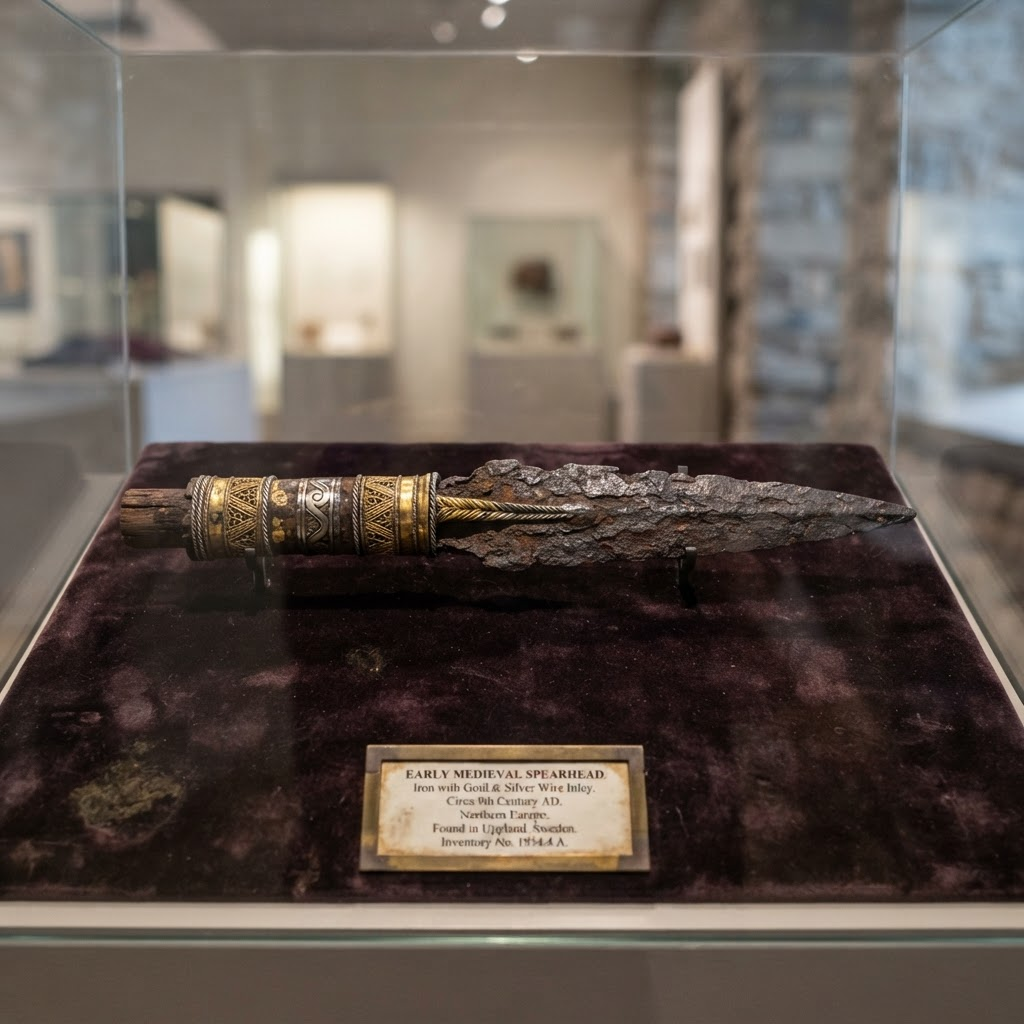
Metallurgy — Centuries Too Late
Scientific dating placed the Vienna "Holy Lance" around the 7th century CE, long after the Crucifixion. Rival lances exist elsewhere, and no relic grants power — the object is medieval veneration wrapped in modern myth.
Verified Sources & Peer-Reviewed References
Metallurgical Analysis of the Vienna Holy Lance
Journal of Archaeological Science·2003Relic Authentication and Rival Claims
Journal of Medieval History·2008The Holy Lance in Occult Literature
Journal of Contemporary Religion·2010Medieval Relic Veneration
Speculum·2005
All sources are peer-reviewed or from accredited space agencies. Dark Myths does not fabricate or misrepresent scientific findings.