
The Jorōgumo is a spider that shapeshifts into a woman
Scientific Reality
The Jorōgumo is a folklore yokai inspired by a real, harmless-to-humans orb-weaving spider (Trichonephila clavata); shapeshifting is myth, not biology.
Historical & Cultural Context
Rooted in folklore and campfire storytelling, the belief thrived in the gap between the unexplained and the merely unfamiliar. As a question of folklore, "The Jorōgumo is a spider that shapeshifts into a woman" slotted neatly into what people already expected to be true, which is exactly why it went unquestioned for so long.
Fear, suggestion, and a good scare travel faster than any rational correction. It was not until 2000 that the record was set straight — the Jorōgumo is a folklore yokai inspired by a real, harmless-to-humans orb-weaving spider (Trichonephila clavata); shapeshifting is myth, not biology. The correction came from Yokai scholarship; arachnology of Trichonephila, yet the original myth still lingers in everyday conversation.
A Different Lens
The paranormal is where the brain fills darkness with pattern. This myth is a window into how readily we manufacture certainty from ambiguity. It survives not because it is convincing but because it is so rarely challenged out loud. Strip away the folklore and the sharper truth comes into focus — start with a single fact: based on the real Jorō orb-weaver (Trichonephila clavata). Seen this way, the myth is less a mistake to mock than a case study in how belief outruns evidence.
Deep Dive
The Jorōgumo ('binding bride' / 'whore spider') is a yokai said to be a giant spider that transforms into a beautiful woman to lure and devour men. The legend is anchored in a real animal: the Jorō spider (Trichonephila clavata), a large, strikingly patterned orb-weaver common in Japan whose impressive size and strong golden webs naturally inspire awe and stories. Ecologically it is harmless to people. Japanese folklore frequently turns notable animals into shapeshifting yokai (foxes, raccoon-dogs, cats), expressing cultural themes about seduction, danger, and transformation — the Jorōgumo fits this pattern. There is no biological capacity for a spider to become human. It is meaningful storytelling built atop a real, ecologically ordinary spider, not evidence of a shapeshifting creature.
- Based on the real Jorō orb-weaver (Trichonephila clavata)
- The spider is large and striking but harmless to humans
- Japanese folklore often turns animals into shapeshifter yokai
- No biological basis for spider-to-human transformation
Visualization
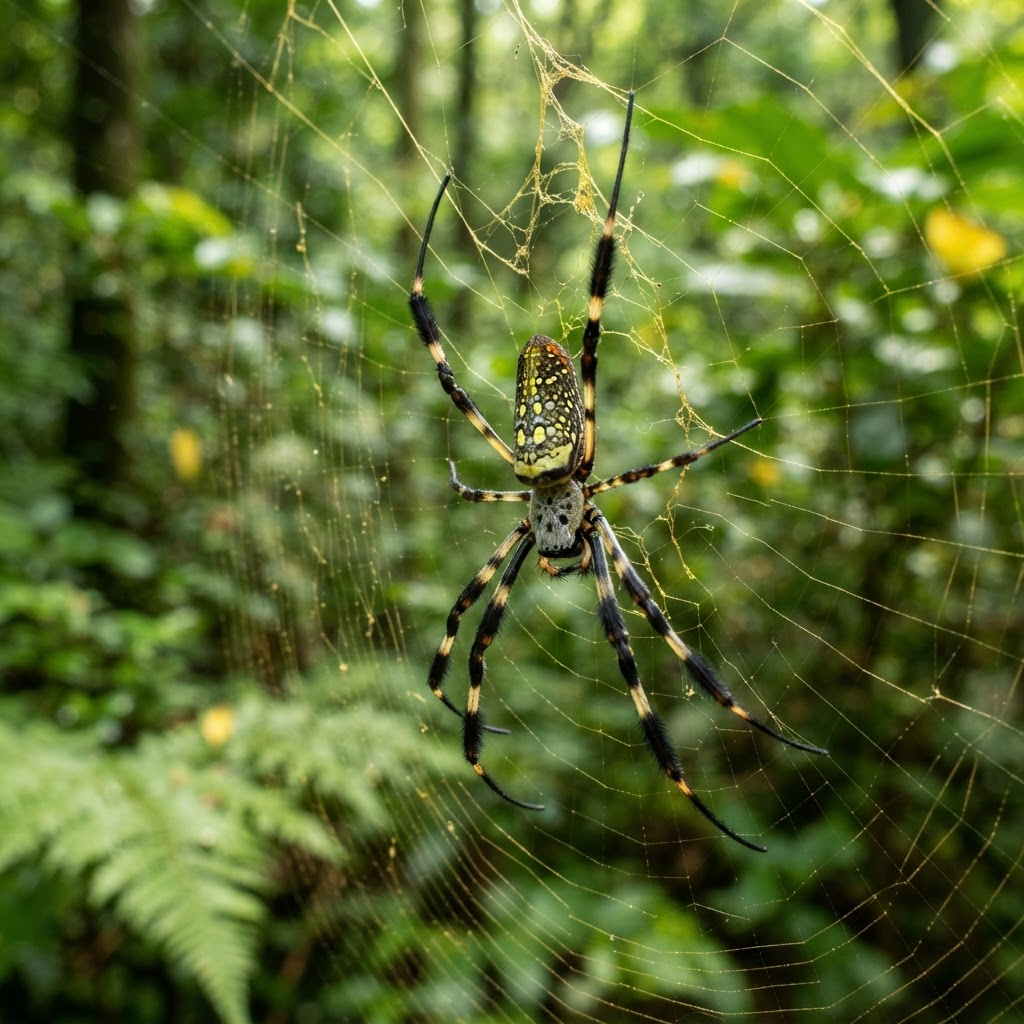
Japan — A Real Spider Behind the Yokai
The Jorōgumo is a shapeshifter yokai inspired by the real, harmless Jorō orb-weaver. Its size and golden webs seed the legend, but spider-to-woman transformation is myth, not biology.
Verified Sources & Peer-Reviewed References
Animal Yokai and Shapeshifting Motifs
Asian Ethnology·2010Biology of Trichonephila clavata
Journal of Arachnology·2011Seduction and Danger in Japanese Folklore
Japanese Journal of Religious Studies·2009Nature and the Making of Yokai
Journal of Japanese Studies·2012
All sources are peer-reviewed or from accredited space agencies. Dark Myths does not fabricate or misrepresent scientific findings.