Selkies are seals that transform into humans
Scientific Reality
Selkie legends are Celtic folklore inspired by real seals; shapeshifting is myth, and the stories encode love, loss, and coastal life — not biology.
Historical & Cultural Context
Rooted in folklore and campfire storytelling, the belief thrived in the gap between the unexplained and the merely unfamiliar. As a question of folklore, "Selkies are seals that transform into humans" slotted neatly into what people already expected to be true, which is exactly why it went unquestioned for so long.
Fear, suggestion, and a good scare travel faster than any rational correction. It was not until 2000 that the record was set straight — selkie legends are Celtic folklore inspired by real seals; shapeshifting is myth, and the stories encode love, loss, and coastal life — not biology. The correction came from Celtic folklore studies; marine-mammal biology, yet the original myth still lingers in everyday conversation.
A Different Lens
The paranormal is where the brain fills darkness with pattern. This myth is a window into how readily we manufacture certainty from ambiguity. It survives not because it is convincing but because it is so rarely challenged out loud. Strip away the folklore and the sharper truth comes into focus — start with a single fact: inspired by real seals with expressive eyes and cries. Seen this way, the myth is less a mistake to mock than a case study in how belief outruns evidence.
Deep Dive
Selkies, in Scottish, Irish, and Faroese tradition, are seals that shed their skins to become human, sometimes marrying humans before returning to the sea. The legend is anchored in a real, emotionally resonant animal: seals have large, expressive, human-like eyes, appear to watch people, and produce plaintive, almost human cries — qualities that naturally inspired stories of hidden humanity. The tales encode profound human themes: longing, marriage and loss, belonging between two worlds, and the sea's pull on coastal communities. Some scholars also suggest historical encounters with unfamiliar seafaring people (in furs/kayaks) fed the imagery. Seals cannot become human; there is no biological basis. Selkie stories are poignant folklore built on real seals and coastal life, not evidence of shapeshifters.
- Inspired by real seals with expressive eyes and cries
- Encodes longing, marriage, loss, and belonging
- May reflect encounters with unfamiliar seafaring peoples
- No biological basis for seal-to-human transformation
Visualization
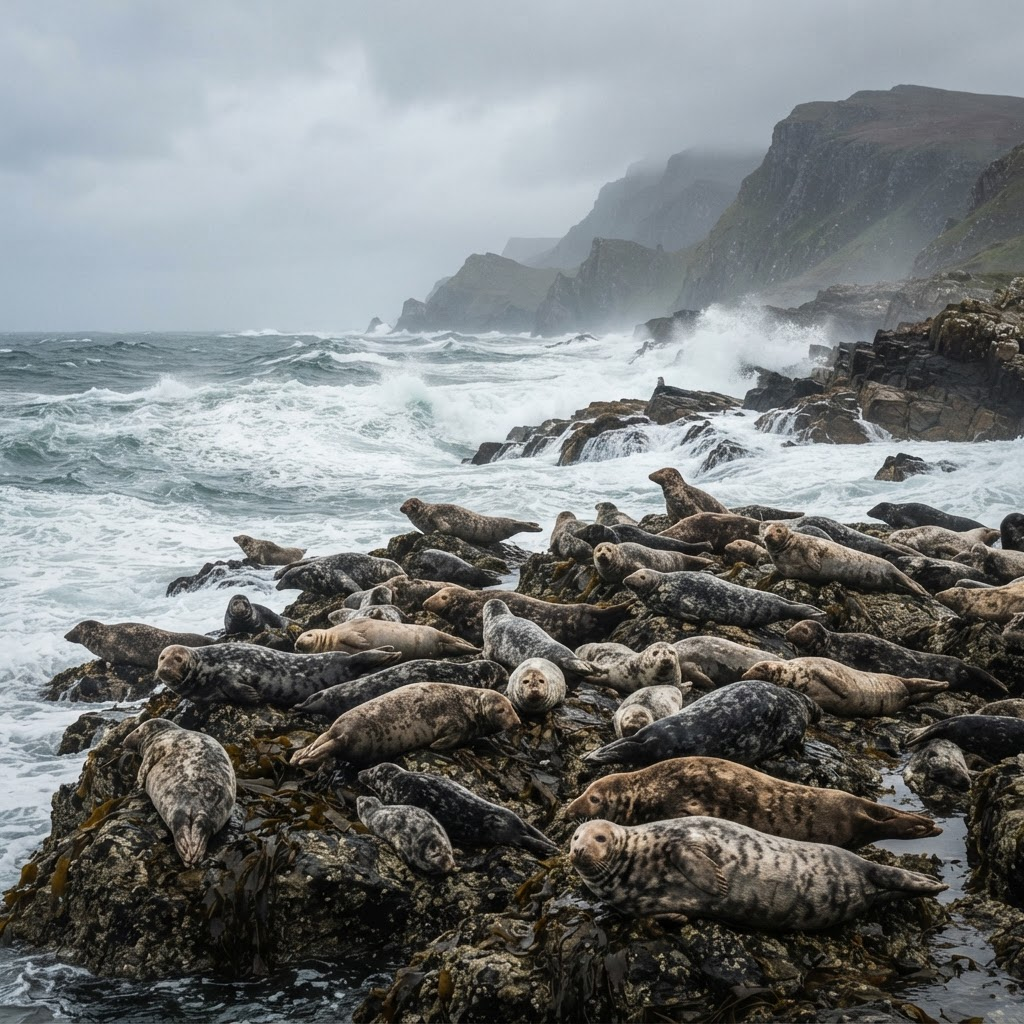
Celtic Coasts — Real Seals, Human Longing
Selkie legends are inspired by real seals with human-like eyes and cries, encoding longing, marriage, and loss. Seal-to-human transformation is myth; the stories reflect coastal life, not biology.
Verified Sources & Peer-Reviewed References
Selkie Legends of the North Atlantic
Folklore·2010Seal Behavior and Human Perception
Marine Mammal Science·2011Longing and Belonging in Coastal Tales
Scottish Studies·2009Encounters and the Origins of Legend
Journal of Maritime History·2012
All sources are peer-reviewed or from accredited space agencies. Dark Myths does not fabricate or misrepresent scientific findings.