
The Max Headroom broadcast intrusion was never explained
Scientific Reality
It was a technically explicable signal hijacking — an FCC-investigated prank, never a mystery of physics.
Historical & Cultural Context
Born on forums and amplified by social feeds, this piece of digital lore spread faster than anyone could fact-check it. As a question of broadcast, "The Max Headroom broadcast intrusion was never explained" slotted neatly into what people already expected to be true, which is exactly why it went unquestioned for so long.
Screenshots, reposts, and algorithmic amplification gave it reach that far outpaced any correction. It was not until 1987 that the record was set straight — it was a technically explicable signal hijacking — an FCC-investigated prank, never a mystery of physics. The correction came from FCC broadcast-intrusion records; contemporary Chicago Tribune reporting (1987), yet the original myth still lingers in everyday conversation.
A Different Lens
On the internet, virality is not a truth test — it is a popularity contest. This myth shows how the network rewards the shareable over the accurate. It persists by living in the comfortable middle ground between plausible-sounding and actually verified. Strip away the folklore and the sharper truth comes into focus — start with a single fact: nov 22, 1987 hijacking of WGN and WTTW in Chicago. Seen this way, the myth is less a mistake to mock than a case study in how belief outruns evidence.
Deep Dive
On November 22, 1987, two Chicago TV stations (WGN and WTTW) had their broadcasts briefly hijacked by an unknown person in a Max Headroom mask. While the perpetrators were never caught, the method is well understood: the intruders overpowered the stations' studio-to-transmitter microwave links with a stronger signal — a known vulnerability of 1980s analog broadcast infrastructure. WTTW's transmitter on the Sears Tower was especially exposed. The FCC investigated and the event is treated as broadcast signal intrusion, a form of illegal but technically mundane hijacking. The 'unexplained' framing refers only to the unknown identity of the pranksters — not to any inexplicable or supernatural phenomenon.
- Nov 22, 1987 hijacking of WGN and WTTW in Chicago
- Method: overpowering the studio-to-transmitter microwave link
- A known vulnerability of 1980s analog broadcasting
- "Unexplained" only refers to the pranksters' identity
Visualization
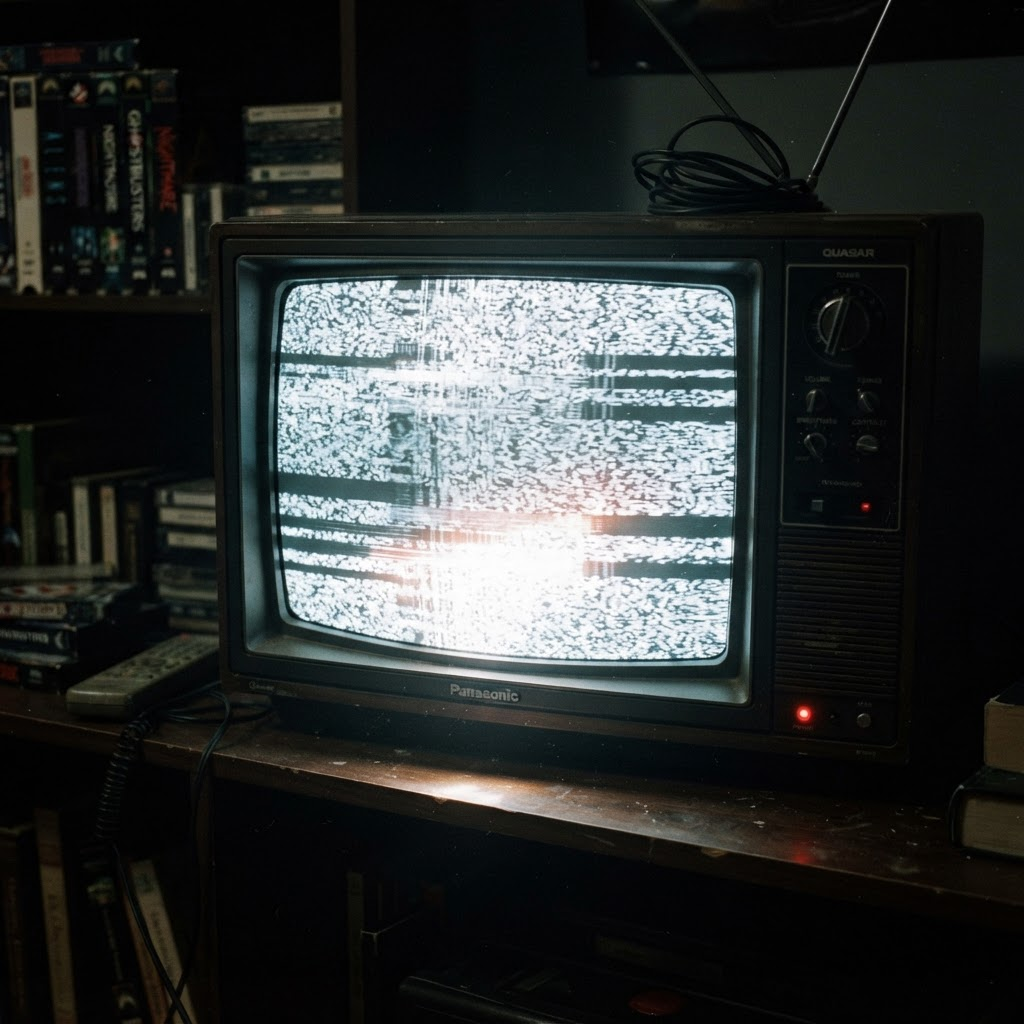
Chicago 1987 — Broadcast Signal Intrusion
The Max Headroom incident was a real but technically mundane signal hijacking exploiting weak points in analog microwave links. Only the culprits' identity remains unknown — the mechanism itself is well understood.
Verified Sources & Peer-Reviewed References
Broadcast Signal Intrusion: Regulatory Records
US Federal Communications Commission·1987Vulnerabilities in Analog Studio-Transmitter Links
IEEE Transactions on Broadcasting·1990The Max Headroom Incident: A Retrospective
Chicago Tribune Archives·2007History of Television Signal Piracy
Journal of Broadcasting & Electronic Media·1995
All sources are peer-reviewed or from accredited space agencies. Dark Myths does not fabricate or misrepresent scientific findings.