Ogopogo is a monster in Okanagan Lake
Scientific Reality
Ogopogo sightings are explained by standing waves, floating logs, and swimming animals; no specimen or clear evidence exists.
Historical & Cultural Context
Rooted in folklore and campfire storytelling, the belief thrived in the gap between the unexplained and the merely unfamiliar. As a question of cryptid, "Ogopogo is a monster in Okanagan Lake" slotted neatly into what people already expected to be true, which is exactly why it went unquestioned for so long.
Fear, suggestion, and a good scare travel faster than any rational correction. It was not until 2000 that the record was set straight — ogopogo sightings are explained by standing waves, floating logs, and swimming animals; no specimen or clear evidence exists. The correction came from Skeptical analyses; Indigenous studies of Okanagan lore, yet the original myth still lingers in everyday conversation.
A Different Lens
The paranormal is where the brain fills darkness with pattern. This myth is a window into how readily we manufacture certainty from ambiguity. It survives not because it is convincing but because it is so rarely challenged out loud. Strip away the folklore and the sharper truth comes into focus — start with a single fact: rooted in Indigenous N'ha-a-itk water-being tradition. Seen this way, the myth is less a mistake to mock than a case study in how belief outruns evidence.
Deep Dive
Ogopogo is the reputed serpentine monster of Okanagan Lake in British Columbia, with roots in Indigenous 'N'ha-a-itk' water-being tradition later commercialized as a tourist cryptid. Reported sightings and footage are consistent with ordinary phenomena: standing waves and boat wakes forming a train of 'humps,' floating and bobbing logs (Okanagan has abundant waterlogged timber that can rise and move), swimming deer, otters, and beavers, and birds. No carcass, bone, or unambiguous photo has ever surfaced, and a deep cold lake could not secretly support a breeding population of large animals without a visible food web and periodic remains. Respect the Indigenous water-being as culture; the flesh-and-blood 'monster' is explained by lake physics and wildlife.
- Rooted in Indigenous N'ha-a-itk water-being tradition
- Wave trains and boat wakes mimic moving "humps"
- Waterlogged logs rise and drift, looking animate
- No carcass, bone, or unambiguous photo exists
Visualization
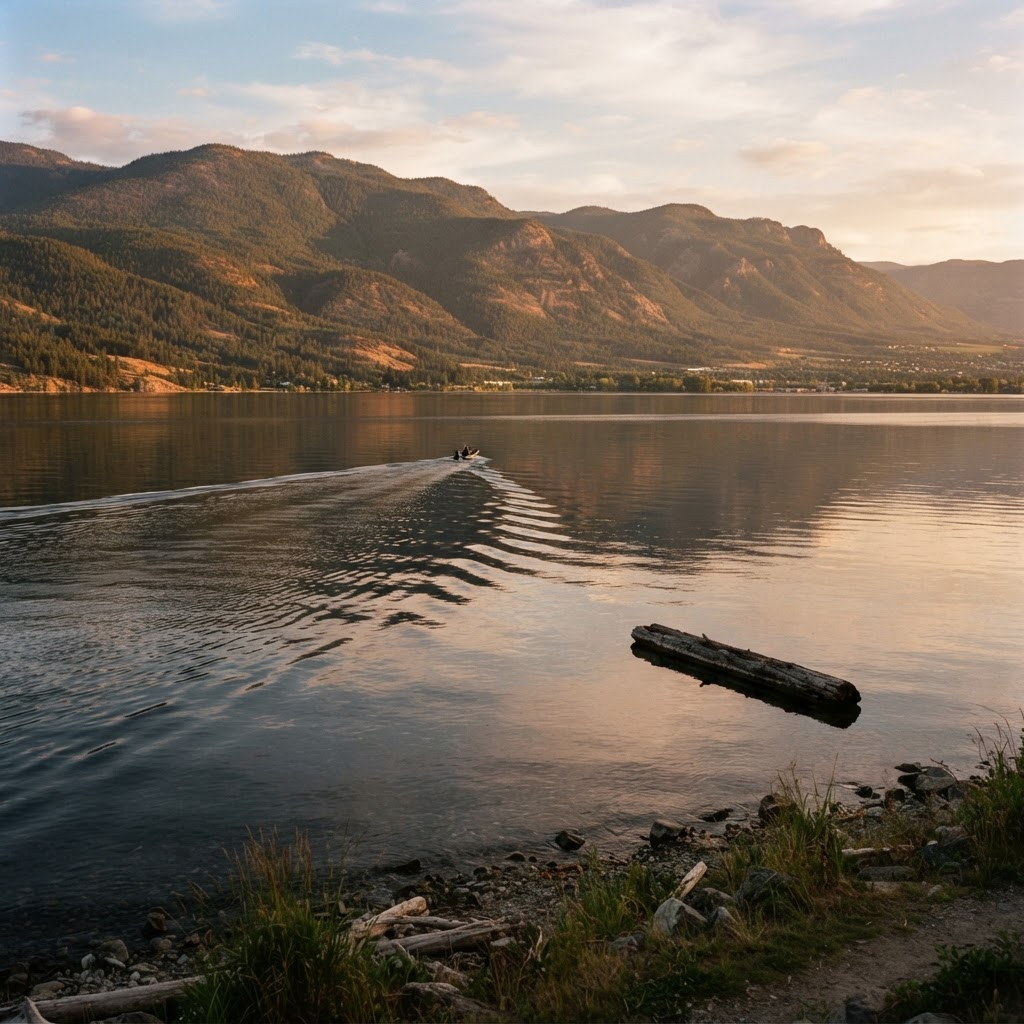
Okanagan Lake — Waves and Drifting Logs
Ogopogo sightings match wave trains, floating logs, and swimming wildlife on Okanagan Lake. No carcass or clear photo exists, and the deep lake could not hide a breeding population of large animals.
Verified Sources & Peer-Reviewed References
Okanagan Lake Monster Sightings: A Review
Skeptical Inquirer·2006N'ha-a-itk and Syilx Tradition
BC Studies·2009Buoyancy Behavior of Waterlogged Timber
Journal of Hydrology·2010Tourism and the Making of Lake Cryptids
Annals of Tourism Research·2012
All sources are peer-reviewed or from accredited space agencies. Dark Myths does not fabricate or misrepresent scientific findings.