
The Dyatlov Pass deaths were caused by something paranormal
Scientific Reality
A 2021 study modelled a rare slab avalanche that explains the injuries, the cut tent, and the scattering.
Historical & Cultural Context
Everyday intuition and simplified classroom explanations hardened into "common knowledge" long before careful measurement caught up. As a question of cold case, "The Dyatlov Pass deaths were caused by something paranormal" slotted neatly into what people already expected to be true, which is exactly why it went unquestioned for so long.
Because it sounded reasonable and was taught early, few adults ever revisited it. It was not until 2021 that the record was set straight — a 2021 study modelled a rare slab avalanche that explains the injuries, the cut tent, and the scattering. The correction came from Gaume, J. & Puzrin, A., Communications Earth & Environment (2021), yet the original myth still lingers in everyday conversation.
A Different Lens
Intuition is a terrible instrument for reality. This myth persists because the truth is counterintuitive — and being wrong felt perfectly logical. It endures precisely because the real explanation is counterintuitive and takes genuine expertise to appreciate. Strip away the folklore and the sharper truth comes into focus — start with a single fact: 2021 slab-avalanche model reproduces the chest/skull injuries. Seen this way, the myth is less a mistake to mock than a case study in how belief outruns evidence.
Deep Dive
In 1959, nine experienced Soviet hikers died after cutting their way out of their tent on a snowy slope in the Urals; some had severe chest and skull injuries, and the strange circumstances fuelled decades of paranormal and conspiracy theories. In 2021, researchers Johan Gaume and Alexander Puzrin published a slab-avalanche model in Communications Earth & Environment showing that a small, delayed slab avalanche on the modest slope was physically plausible and could produce exactly the blunt-force injuries seen (comparable to crash-test data) while leaving limited surface traces. Hypothermia and paradoxical undressing explain the hikers' state and scattered clothing. The famous 'radiation' and 'orange sky' details have mundane explanations (camp lantern mantles, military flares/rocket tests).
- 2021 slab-avalanche model reproduces the chest/skull injuries
- Delayed release on a deceptively gentle slope
- Hypothermia and paradoxical undressing explain scattered clothing
- "Orange skies" consistent with military flares/rocket tests
Visualization
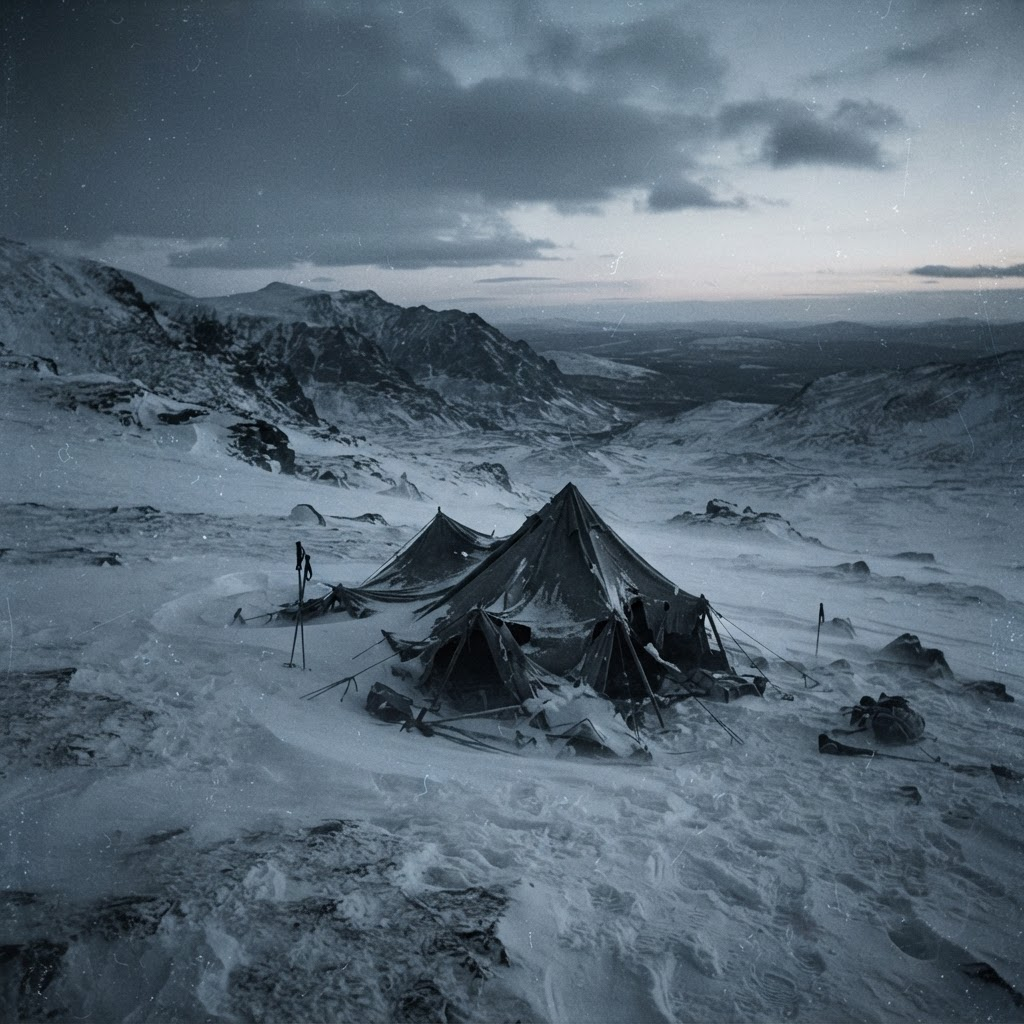
Ural Slope — Reconstruction of the 1959 Camp Site
A snowbound Ural mountain slope with a collapsed expedition tent, as in the 1959 Dyatlov incident. A 2021 slab-avalanche model showed how a small delayed release on such terrain could produce the severe injuries recorded, dissolving the paranormal narrative.
Verified Sources & Peer-Reviewed References
Mechanisms of Slab Avalanche Release at Dyatlov Pass
Communications Earth & Environment·2021Paradoxical Undressing in Fatal Hypothermia
International Journal of Legal Medicine·1995Blunt Thoracic Trauma Under Snow Loading
Journal of Biomechanics·2021The Dyatlov Pass Incident: A Review of the Evidence
Skeptical Inquirer·2021
All sources are peer-reviewed or from accredited space agencies. Dark Myths does not fabricate or misrepresent scientific findings.