
Sitting in "Satan's Chair" curses or kills you
Scientific Reality
"Satan's Chair" legends attach a curse to old stone seats or grave features; any 'deaths' are coincidence and confirmation bias, not a cursed object.
Historical & Cultural Context
Rooted in folklore and campfire storytelling, the belief thrived in the gap between the unexplained and the merely unfamiliar. As a question of folklore, "Sitting in "Satan's Chair" curses or kills you" slotted neatly into what people already expected to be true, which is exactly why it went unquestioned for so long.
Fear, suggestion, and a good scare travel faster than any rational correction. It was not until 2000 that the record was set straight — "Satan's Chair" legends attach a curse to old stone seats or grave features; any 'deaths' are coincidence and confirmation bias, not a cursed object. The correction came from Folklore studies; psychology of superstition, yet the original myth still lingers in everyday conversation.
A Different Lens
The paranormal is where the brain fills darkness with pattern. This myth is a window into how readily we manufacture certainty from ambiguity. It survives not because it is convincing but because it is so rarely challenged out loud. Strip away the folklore and the sharper truth comes into focus — start with a single fact: the "chairs" are old grave markers or natural rock seats. Seen this way, the myth is less a mistake to mock than a case study in how belief outruns evidence.
Deep Dive
Several sites feature a 'Satan's Chair' (or 'Devil's Chair') — a stone seat, carved chair-shaped grave marker, or rock formation said to curse, harm, or kill anyone who sits in it, often as a local dare. These are ordinary objects: Victorian cemeteries sometimes included chair-shaped memorials, and natural rocks can resemble seats. The 'curse' persists through classic psychology: memorable stories of misfortune after sitting are retained and retold, while the vast majority who sit and are fine are ignored (confirmation bias and selective memory). Teenagers' dares and spooky settings add adrenaline. There is no mechanism by which a chair could cause harm, and no verified pattern of deaths exceeding chance. It is dare culture and biased storytelling around an old object, not a lethal curse.
- The "chairs" are old grave markers or natural rock seats
- Rare misfortunes are remembered; countless safe sits ignored
- Confirmation bias sustains the "curse"
- No mechanism and no above-chance death pattern exist
Visualization
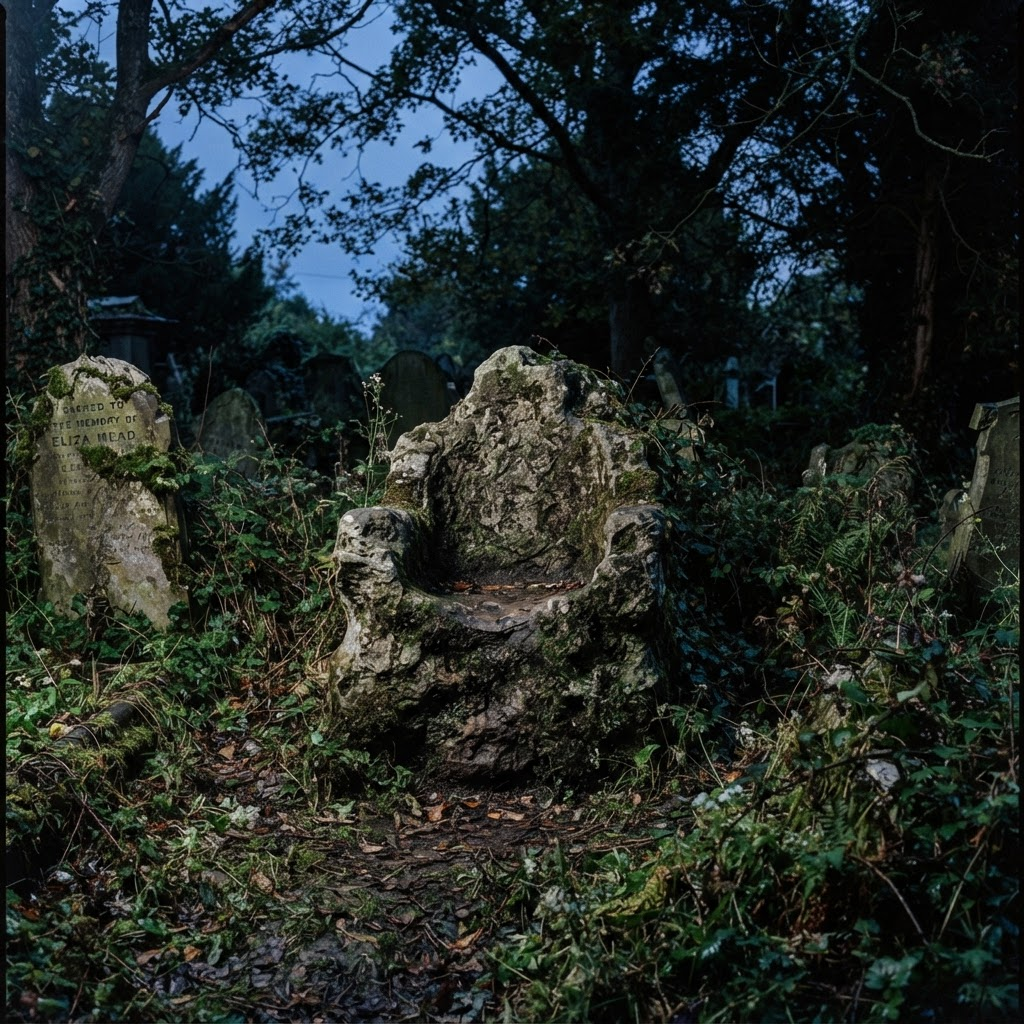
Satan's Chair — Bias, Not a Curse
"Satan's Chair" is an old stone seat or grave marker wrapped in dare culture. Confirmation bias remembers rare misfortunes and ignores countless safe sits; there is no curse mechanism.
Verified Sources & Peer-Reviewed References
Cursed-Object Legends and Dare Culture
Journal of American Folklore·2010Confirmation Bias in Belief Maintenance
Review of General Psychology·2009Victorian Cemetery Memorial Forms
Mortality·2011Adolescent Legend-Tripping
Contemporary Legend·2008
All sources are peer-reviewed or from accredited space agencies. Dark Myths does not fabricate or misrepresent scientific findings.