
The Hum is a mysterious sound with a paranormal source
Scientific Reality
The Hum is a genuinely experienced low-frequency sound with mundane candidates: internal, acoustic, and environmental sources.
Historical & Cultural Context
Everyday intuition and simplified classroom explanations hardened into "common knowledge" long before careful measurement caught up. As a question of acoustics, "The Hum is a mysterious sound with a paranormal source" slotted neatly into what people already expected to be true, which is exactly why it went unquestioned for so long.
Because it sounded reasonable and was taught early, few adults ever revisited it. It was not until 2003 that the record was set straight — the Hum is a genuinely experienced low-frequency sound with mundane candidates: internal, acoustic, and environmental sources. The correction came from Taos Hum investigation (1993); Deming, D., Journal of Scientific Exploration (2004), yet the original myth still lingers in everyday conversation.
A Different Lens
Intuition is a terrible instrument for reality. This myth persists because the truth is counterintuitive — and being wrong felt perfectly logical. It endures precisely because the real explanation is counterintuitive and takes genuine expertise to appreciate. Strip away the folklore and the sharper truth comes into focus — start with a single fact: only a minority of people in an area hear it. Seen this way, the myth is less a mistake to mock than a case study in how belief outruns evidence.
Deep Dive
The 'Hum' (famously the Taos Hum, Bristol Hum, and others) is a persistent low-frequency droning that a minority of people report, often maddening to those who hear it. It is real as an experience, but investigations point to prosaic causes that vary by case. Some hearers have measurable otoacoustic emissions or heightened low-frequency sensitivity — the sound can be partly internal (a form of tinnitus). Others trace to identifiable environmental sources: industrial fans, HVAC systems, diesel engines, gas pipelines, or distant machinery, whose low frequencies travel far and are hard to localize. In the Taos study, no external acoustic source was found for all hearers, supporting individual auditory factors. It is a real perceptual/acoustic puzzle with earthly explanations — not a paranormal signal.
- Only a minority of people in an area hear it
- Often linked to tinnitus / low-frequency sensitivity
- Environmental sources (machinery, HVAC) explain many cases
- Taos study found no single external source for all hearers
Visualization
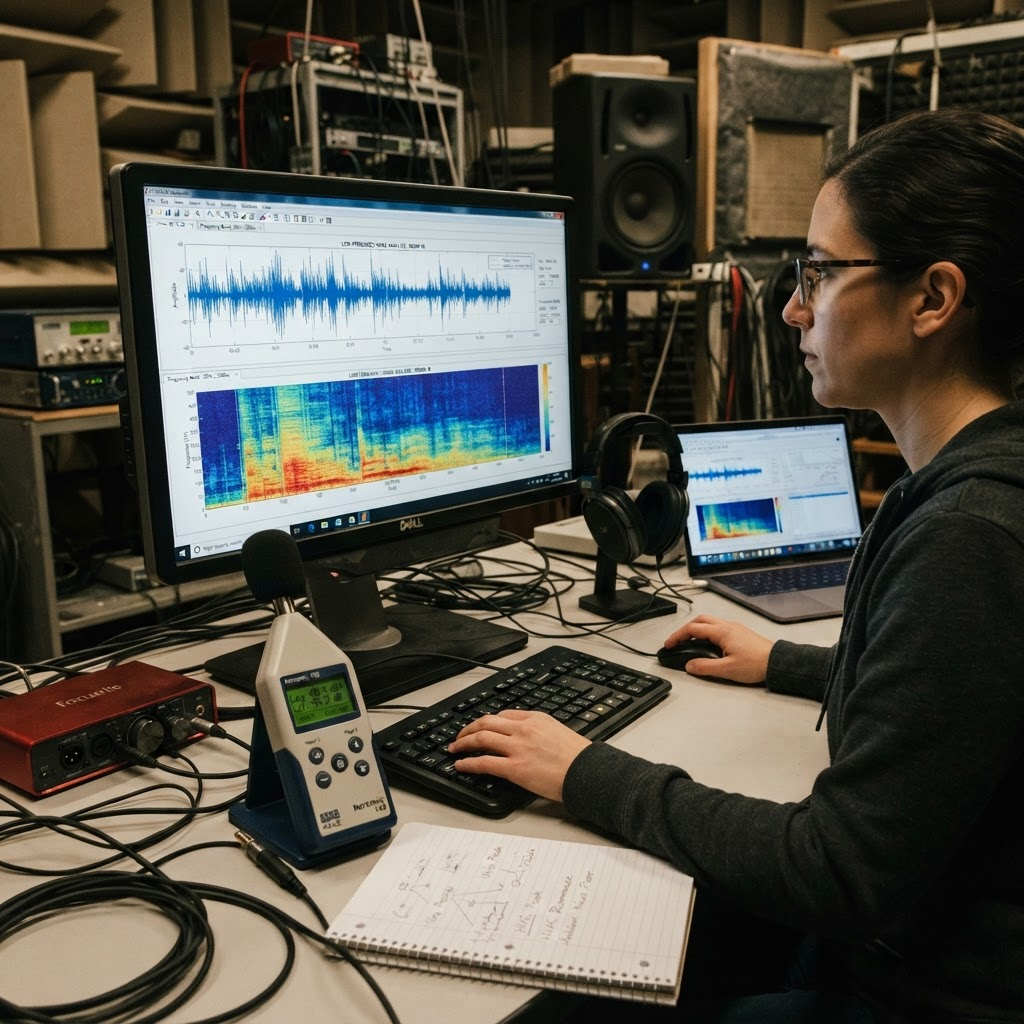
Acoustics & Audiology — A Real but Earthly Puzzle
The Hum is genuinely heard by some people and traces to a mix of internal auditory factors (like tinnitus) and hard-to-localize low-frequency machinery — an acoustics puzzle, not a paranormal source.
Verified Sources & Peer-Reviewed References
The Taos Hum Investigation
University of New Mexico·1993The Hum: An Anomalous Sound Heard Around the World
Journal of Scientific Exploration·2004Otoacoustic Emissions and Low-Frequency Hearing
Hearing Research·2010Propagation of Low-Frequency Environmental Noise
Journal of the Acoustical Society of America·2012
All sources are peer-reviewed or from accredited space agencies. Dark Myths does not fabricate or misrepresent scientific findings.