
The 'Curse of the Pharaohs' killed Tutankhamun's excavators
Scientific Reality
A statistical study found no reduced lifespan among those present at the tomb's opening.
Historical & Cultural Context
The belief was handed down through school textbooks, national folklore, and popular retellings. As a question of cursed object, "The 'Curse of the Pharaohs' killed Tutankhamun's excavators" slotted neatly into what people already expected to be true, which is exactly why it went unquestioned for so long.
Each generation repeated it with more confidence than evidence, and vivid stories outcompeted dry accuracy. It was not until 2002 that the record was set straight — a statistical study found no reduced lifespan among those present at the tomb's opening. The correction came from Nelson, M.R., BMJ (2002), yet the original myth still lingers in everyday conversation.
A Different Lens
What endures is rarely what happened — it is what makes the best story. This myth reveals how collective memory edits the past for meaning, not precision. It survives not because it is convincing but because it is so rarely challenged out loud. Strip away the folklore and the sharper truth comes into focus — start with a single fact: 2002 BMJ study: no reduced lifespan for the "exposed" group. Seen this way, the myth is less a mistake to mock than a case study in how belief outruns evidence.
Deep Dive
After Lord Carnarvon died of an infected mosquito bite in 1923, months after Tutankhamun's tomb was opened, the press invented the 'Curse of the Pharaohs.' A 2002 study by Mark Nelson in the BMJ tracked 44 Westerners Howard Carter identified as present, comparing the 25 potentially 'exposed' to the tomb with others: there was no significant difference in survival, and the exposed group lived on average into their 70s. Howard Carter himself, the most exposed of all, lived 16 more years. Occasional claims of 'tomb toxins' (molds, bacteria) are not supported as a cause of the deaths. The curse is a media narrative built on a few coincidental deaths and heavy selective reporting.
- 2002 BMJ study: no reduced lifespan for the "exposed" group
- Exposed individuals lived on average into their 70s
- Howard Carter lived 16 years after opening the tomb
- Curse popularized by 1923 press after Carnarvon's death
Visualization
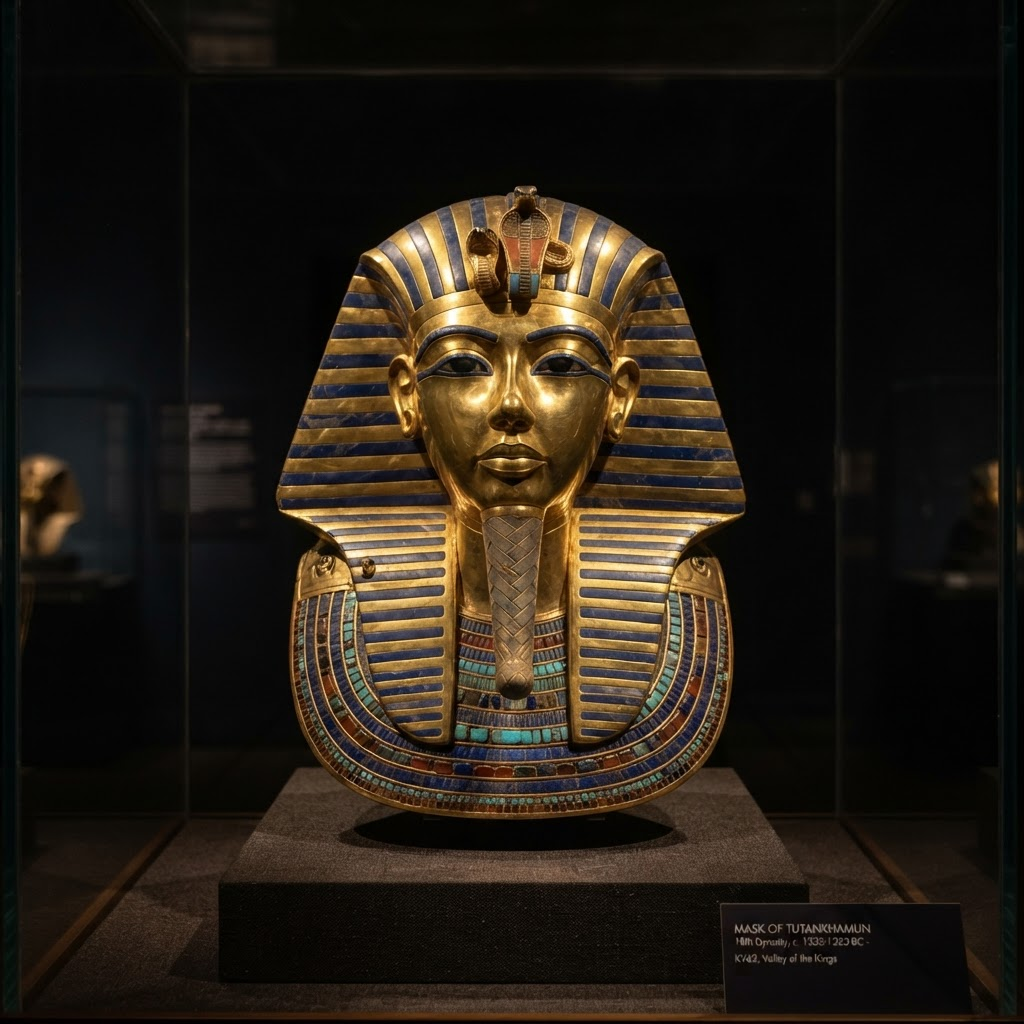
Tutankhamun's Mask — Excavation Legacy
The golden mask of Tutankhamun. A 2002 BMJ survival analysis found no 'curse' effect: those present at the tomb's opening lived normal lifespans, and Howard Carter himself lived another 16 years.
Verified Sources & Peer-Reviewed References
The Mummy's Curse: Historical Cohort Study
BMJ·2002Microbial Hazards in Ancient Tombs
Journal of Occupational Health·2005Media Origins of the Pharaoh's Curse
Journal of the History of Medicine·2004Selective Reporting and Anecdotal Curses
Skeptical Inquirer·2003
All sources are peer-reviewed or from accredited space agencies. Dark Myths does not fabricate or misrepresent scientific findings.