The Annabelle doll is genuinely possessed
Scientific Reality
Every claim about Annabelle is an unfalsifiable anecdote with no independent evidence.
Historical & Cultural Context
Rooted in folklore and campfire storytelling, the belief thrived in the gap between the unexplained and the merely unfamiliar. As a question of haunted object, "The Annabelle doll is genuinely possessed" slotted neatly into what people already expected to be true, which is exactly why it went unquestioned for so long.
Fear, suggestion, and a good scare travel faster than any rational correction. It was not until 2014 that the record was set straight — every claim about Annabelle is an unfalsifiable anecdote with no independent evidence. The correction came from Nickell, J., Skeptical Inquirer (2014); Radford, B., Investigating haunted objects (2017), yet the original myth still lingers in everyday conversation.
A Different Lens
The paranormal is where the brain fills darkness with pattern. This myth is a window into how readily we manufacture certainty from ambiguity. It survives not because it is convincing but because it is so rarely challenged out loud. Strip away the folklore and the sharper truth comes into focus — start with a single fact: no controlled documentation of any alleged movement or harm. Seen this way, the myth is less a mistake to mock than a case study in how belief outruns evidence.
Deep Dive
The Annabelle legend — popularised by paranormal investigators Ed and Lorraine Warren and later by horror films — centres on a Raggedy Ann doll said to move and cause harm. Critically, none of the alleged phenomena have ever been documented under controlled conditions: there is no verified footage of the doll moving, no measurements, and no independent testing. The stories rely on memory, suggestion, and the Warrens' well-documented track record of promoting unverified hauntings. The real doll sits in a locked case as a museum attraction. Belief is sustained by confirmation bias, dramatic storytelling, and the horror franchise — not by evidence. This mirrors the broader 'haunted object' pattern of apophenia and narrative attribution.
- No controlled documentation of any alleged movement or harm
- Claims sourced to the Warrens, known for unverified cases
- Sustained by film franchise and confirmation bias
- Fits the general "cursed/haunted object" psychology
Visualization
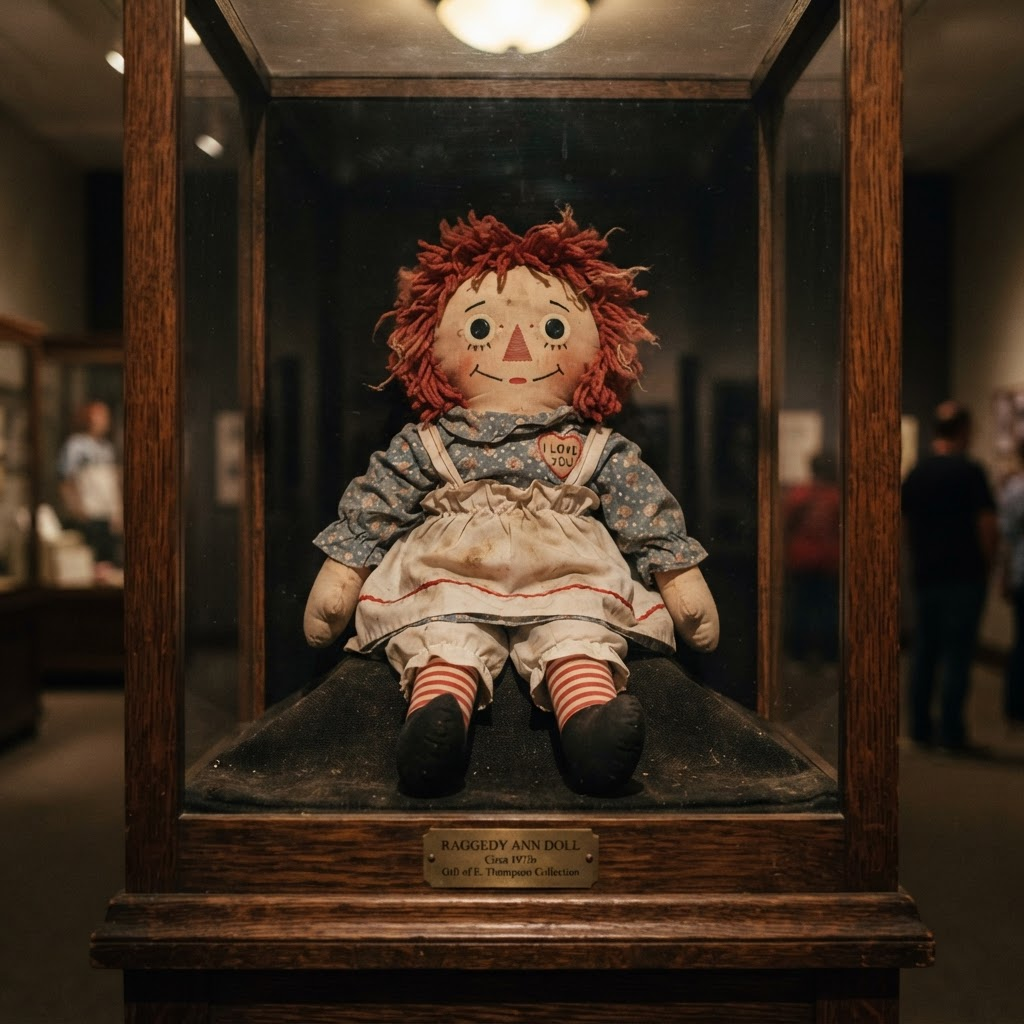
Haunted-Object Claim — Anecdote Without Evidence
The Annabelle legend rests entirely on unverifiable stories and a horror franchise. No measurement, footage, or controlled test supports the claims — a textbook example of narrative attribution and confirmation bias around an ordinary object.
Verified Sources & Peer-Reviewed References
Haunted Dolls and the Psychology of Belief
Skeptical Inquirer·2014Investigating Haunted and Cursed Objects
Center for Inquiry·2017The Warrens and Unverified Paranormal Claims
Skeptical Inquirer·2016Apophenia and Object Attribution
Cognition·2009
All sources are peer-reviewed or from accredited space agencies. Dark Myths does not fabricate or misrepresent scientific findings.