
Okiku's doll grows real human hair
Scientific Reality
The doll's "growing" hair is explained by the properties of the real human hair originally used to make it.
Historical & Cultural Context
Rooted in folklore and campfire storytelling, the belief thrived in the gap between the unexplained and the merely unfamiliar. As a question of haunted object, "Okiku's doll grows real human hair" slotted neatly into what people already expected to be true, which is exactly why it went unquestioned for so long.
Fear, suggestion, and a good scare travel faster than any rational correction. It was not until 2000 that the record was set straight — the doll's "growing" hair is explained by the properties of the real human hair originally used to make it. The correction came from Material analyses of doll hair; Japanese cultural documentation, yet the original myth still lingers in everyday conversation.
A Different Lens
The paranormal is where the brain fills darkness with pattern. This myth is a window into how readily we manufacture certainty from ambiguity. It persists by living in the comfortable middle ground between plausible-sounding and actually verified. Strip away the folklore and the sharper truth comes into focus — start with a single fact: made with real human hair (not living/growing). Seen this way, the myth is less a mistake to mock than a case study in how belief outruns evidence.
Deep Dive
Okiku is a treasured doll at the Mannenji temple in Hokkaido, Japan, said to be inhabited by the spirit of a girl who died in 1918 and whose hair reportedly grows. It is a genuine and respected cultural/religious artifact. The mundane explanation is well grounded: the doll was made with real human hair, and several factors can make such hair appear to lengthen over time — hairs that were originally set deep into the head can slip outward slightly, the scalp material can shift, and handling/settling exposes more length. Reports also note the hair stays at roughly chin length rather than growing indefinitely, consistent with fixed-length human hair rather than living growth. Respecting Okiku as meaningful heritage is appropriate; the specific 'growing' claim has a material explanation.
- Made with real human hair (not living/growing)
- Set hairs can slip outward, appearing to "lengthen"
- Hair stays ~chin length, not growing indefinitely
- A respected cultural/religious artifact in Hokkaido
Visualization
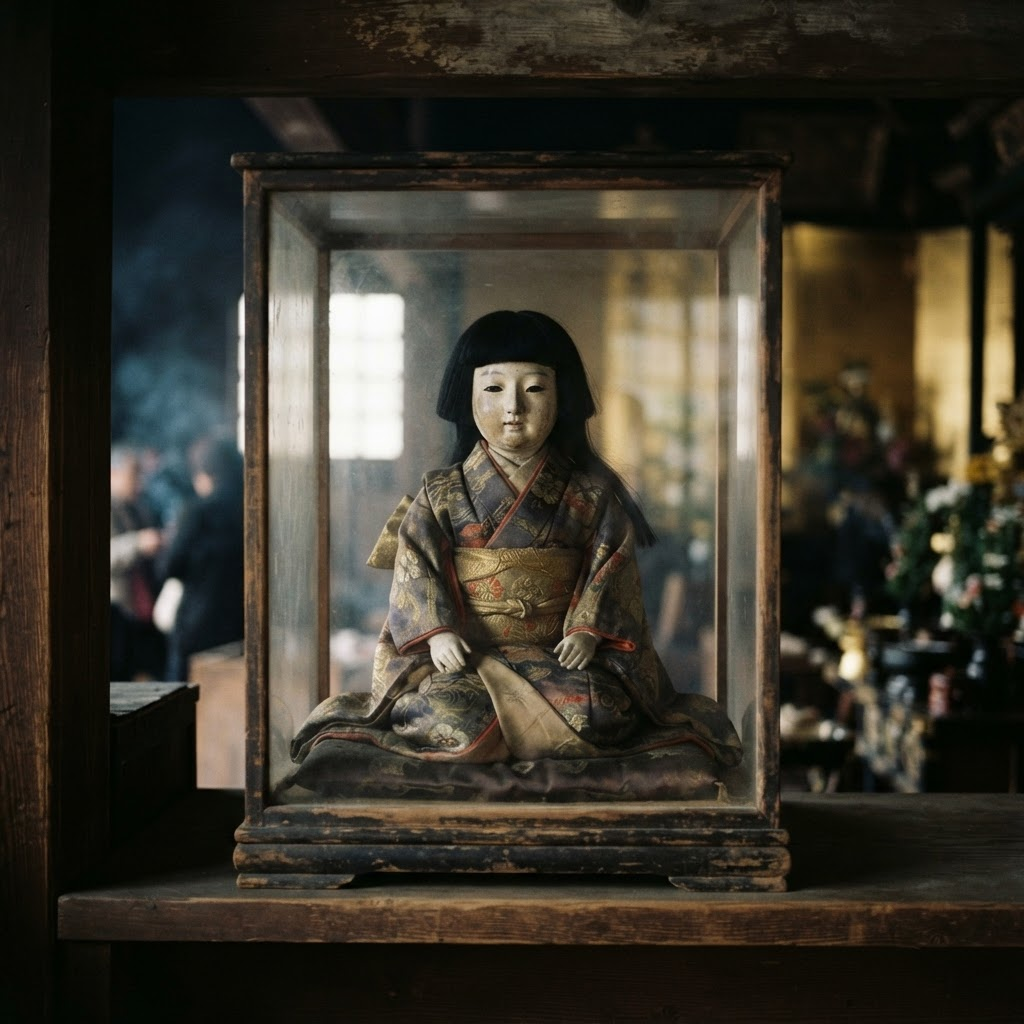
Okiku Doll — Real Human Hair, Not Living Growth
A traditional Japanese doll like Okiku at Mannenji temple. The "growing" hair is real human hair set into the doll; settling and slippage make it appear to lengthen, and it stays at a fixed chin length.
Verified Sources & Peer-Reviewed References
Properties of Human Hair in Antique Dolls
Journal of Material Culture·2008Okiku and Doll Veneration in Japan
Asian Ethnology·2010Fiber Slippage and Apparent Lengthening
Textile Research Journal·2012Haunted Object Claims and Material Explanations
Skeptical Inquirer·2015
All sources are peer-reviewed or from accredited space agencies. Dark Myths does not fabricate or misrepresent scientific findings.