
Robert the Doll is possessed and curses those who mock him
Scientific Reality
Robert the Doll's "curse" is a textbook case of confirmation bias and self-reported misfortune.
Historical & Cultural Context
Rooted in folklore and campfire storytelling, the belief thrived in the gap between the unexplained and the merely unfamiliar. As a question of haunted object, "Robert the Doll is possessed and curses those who mock him" slotted neatly into what people already expected to be true, which is exactly why it went unquestioned for so long.
Fear, suggestion, and a good scare travel faster than any rational correction. It was not until 2015 that the record was set straight — robert the Doll's "curse" is a textbook case of confirmation bias and self-reported misfortune. The correction came from Radford, B. — Investigating cursed objects (2017); Nickell, J., Skeptical Inquirer, yet the original myth still lingers in everyday conversation.
A Different Lens
The paranormal is where the brain fills darkness with pattern. This myth is a window into how readily we manufacture certainty from ambiguity. It survives not because it is convincing but because it is so rarely challenged out loud. Strip away the folklore and the sharper truth comes into focus — start with a single fact: early-1900s doll displayed in a Key West museum. Seen this way, the myth is less a mistake to mock than a case study in how belief outruns evidence.
Deep Dive
Robert the Doll is an early-1900s doll once owned by painter Robert Eugene Otto, now displayed at the Fort East Martello Museum in Key West. Visitors are told that photographing or mocking him without permission brings bad luck, and the museum displays letters from people begging forgiveness after misfortunes. This is a clear feedback loop: visitors primed to expect a curse then attribute any subsequent bad luck to the doll (confirmation bias), while the thousands who experience nothing never write in. There is no controlled evidence of any anomalous effect. The doll's unsettling appearance and a compelling story do the rest. It is a beloved local attraction built on suggestion, not a demonstrated curse.
- Early-1900s doll displayed in a Key West museum
- "Apology letters" reflect self-selected misfortune reports
- Classic confirmation bias: hits remembered, misses ignored
- No controlled evidence of any anomalous effect
Visualization
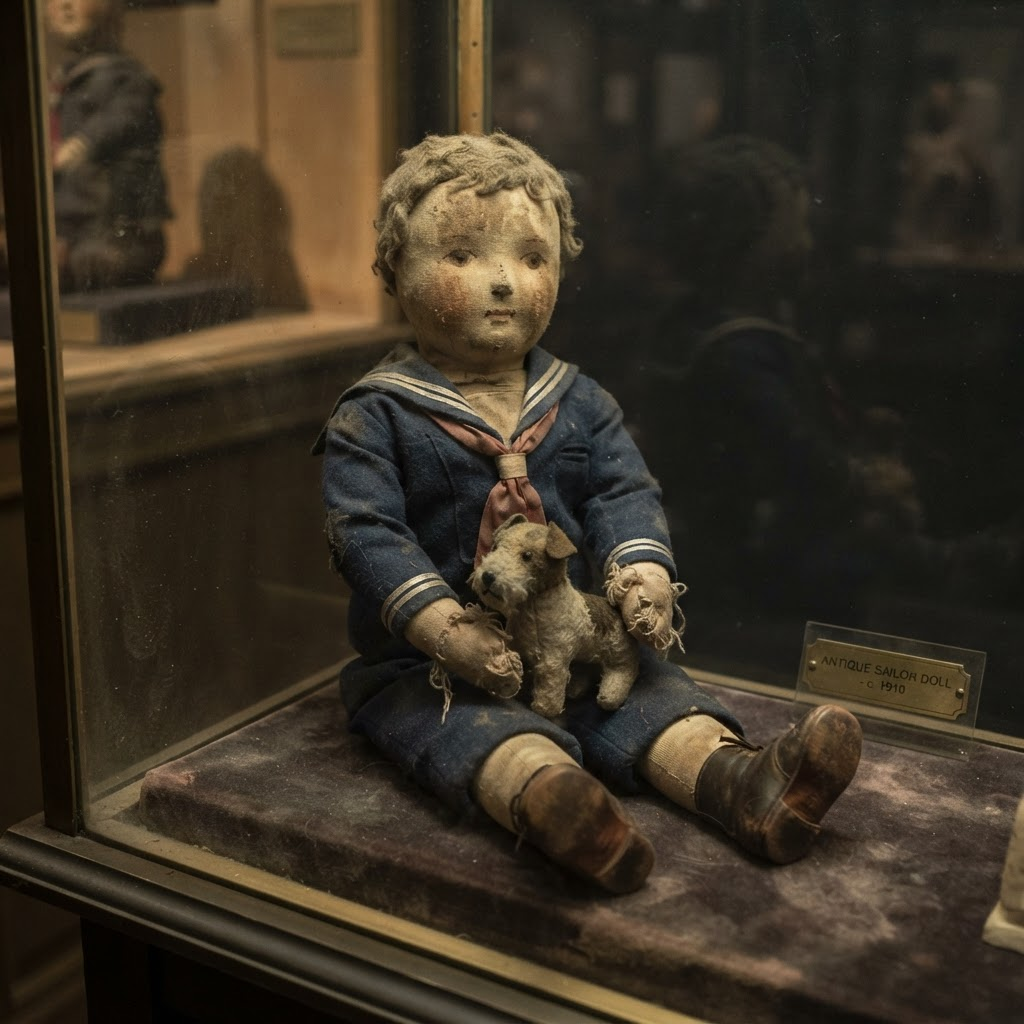
Key West Museum — Curse by Confirmation Bias
Robert the Doll's reputation rests on visitors attributing later misfortunes to him while ignoring the thousands who suffer nothing. The "apology letters" are a self-selected sample — a vivid demonstration of confirmation bias.
Verified Sources & Peer-Reviewed References
Investigating Haunted and Cursed Objects
Center for Inquiry·2017Confirmation Bias in Everyday Reasoning
Review of General Psychology·1998The Psychology of Superstition
Current Directions in Psychological Science·2010Self-Selection in Anecdotal Reporting
Skeptical Inquirer·2015
All sources are peer-reviewed or from accredited space agencies. Dark Myths does not fabricate or misrepresent scientific findings.