
The Devil's Kettle waterfall leads nowhere (unsolved)
Scientific Reality
A 2017 hydrology study showed the water simply rejoins the river downstream — there was no missing water.
Historical & Cultural Context
Everyday intuition and simplified classroom explanations hardened into "common knowledge" long before careful measurement caught up. As a question of geology, "The Devil's Kettle waterfall leads nowhere (unsolved)" slotted neatly into what people already expected to be true, which is exactly why it went unquestioned for so long.
Because it sounded reasonable and was taught early, few adults ever revisited it. It was not until 2017 that the record was set straight — a 2017 hydrology study showed the water simply rejoins the river downstream — there was no missing water. The correction came from Minnesota Department of Natural Resources hydrology study (2017), yet the original myth still lingers in everyday conversation.
A Different Lens
Intuition is a terrible instrument for reality. This myth persists because the truth is counterintuitive — and being wrong felt perfectly logical. It persists by living in the comfortable middle ground between plausible-sounding and actually verified. Strip away the folklore and the sharper truth comes into focus — start with a single fact: a genuine puzzle: half the river seemed to vanish. Seen this way, the myth is less a mistake to mock than a case study in how belief outruns evidence.
Deep Dive
For decades, the Devil's Kettle on Minnesota's Brule River was a real, honest puzzle: the river splits at a waterfall, and half plunges into a pothole and seemingly 'disappears,' with dye tests and floating objects reportedly never seen again — spawning legends of a bottomless hole or hidden outlet. In 2017, hydrologists from the Minnesota DNR resolved it with a straightforward measurement: they gauged the river's flow above the falls and below, and the volumes essentially matched, meaning the water rejoins the main channel just downstream, underwater. Earlier 'dye vanished' claims failed because dye and objects are dispersed, diluted, and re-emerge in turbulent, aerated water where they're hard to see. The DNR even advised that dropping objects in doesn't work because they get churned and pushed out below. A good example of a real mystery solved by careful science.
- A genuine puzzle: half the river seemed to vanish
- 2017 Minnesota DNR study measured flow above and below
- Volumes matched — water rejoins the river downstream
- Old "dye vanished" claims failed due to dilution/turbulence
Visualization
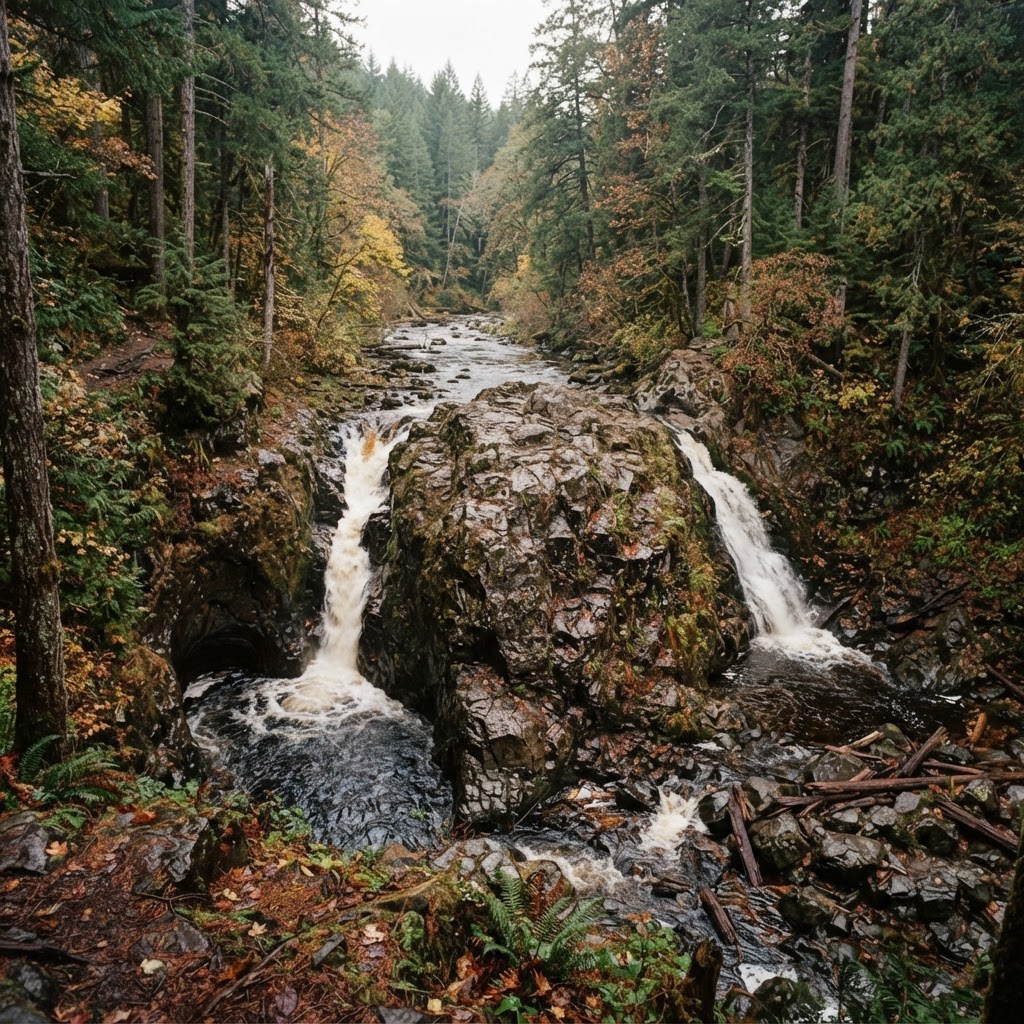
Devil's Kettle — Water Rejoins the River
The Devil's Kettle falls, where half the Brule River plunges into a pothole. A 2017 flow study measured matching volumes above and below the falls, showing the water simply rejoins the channel downstream.
Verified Sources & Peer-Reviewed References
Flow Measurement Resolving the Devil's Kettle
Minnesota Department of Natural Resources·2017Plunge Pool Hydrodynamics
Water Resources Research·2010Dye Tracing Limitations in Turbulent Flow
Journal of Hydrology·2012Basalt Geology of the North Shore
Geological Society of America Bulletin·2008
All sources are peer-reviewed or from accredited space agencies. Dark Myths does not fabricate or misrepresent scientific findings.