
The Library of Alexandria was destroyed in a single catastrophic fire
Scientific Reality
The Library declined gradually over centuries through multiple events, not one legendary fire that erased all knowledge.
Historical & Cultural Context
The belief was handed down through school textbooks, national folklore, and popular retellings. As a question of historical myth, "The Library of Alexandria was destroyed in a single catastrophic fire" slotted neatly into what people already expected to be true, which is exactly why it went unquestioned for so long.
Each generation repeated it with more confidence than evidence, and vivid stories outcompeted dry accuracy. It was not until 2000 that the record was set straight — the Library declined gradually over centuries through multiple events, not one legendary fire that erased all knowledge. The correction came from Bagnall, R. — "Alexandria: Library of Dreams" (2002); classical scholarship, yet the original myth still lingers in everyday conversation.
A Different Lens
What endures is rarely what happened — it is what makes the best story. This myth reveals how collective memory edits the past for meaning, not precision. It persists by living in the comfortable middle ground between plausible-sounding and actually verified. Strip away the folklore and the sharper truth comes into focus — start with a single fact: decline unfolded over ~four centuries, not one night. Seen this way, the myth is less a mistake to mock than a case study in how belief outruns evidence.
Deep Dive
The popular image — a single fire destroying the sum of ancient knowledge overnight — is a dramatic oversimplification. The Library of Alexandria declined over roughly four centuries through several distinct blows: Julius Caesar's fire in 48 BCE (which damaged part of the collection or nearby warehouses), decline in institutional support, the crisis under Aurelian (~270s CE), and later events. There was no single apocalyptic moment. Moreover, 'losing the library' did not erase all ancient knowledge: many texts existed in copies elsewhere (Pergamon, Rome, Constantinople), and much was lost gradually simply because manuscripts must be recopied to survive. Historians emphasize slow institutional decay and dispersal, not one civilization-ending fire. The myth flattens a complex, gradual process into a single tragedy.
- Decline unfolded over ~four centuries, not one night
- Caesar's 48 BCE fire damaged only part of the holdings
- Loss of funding and multiple crises contributed
- Many texts survived in copies elsewhere
Visualization
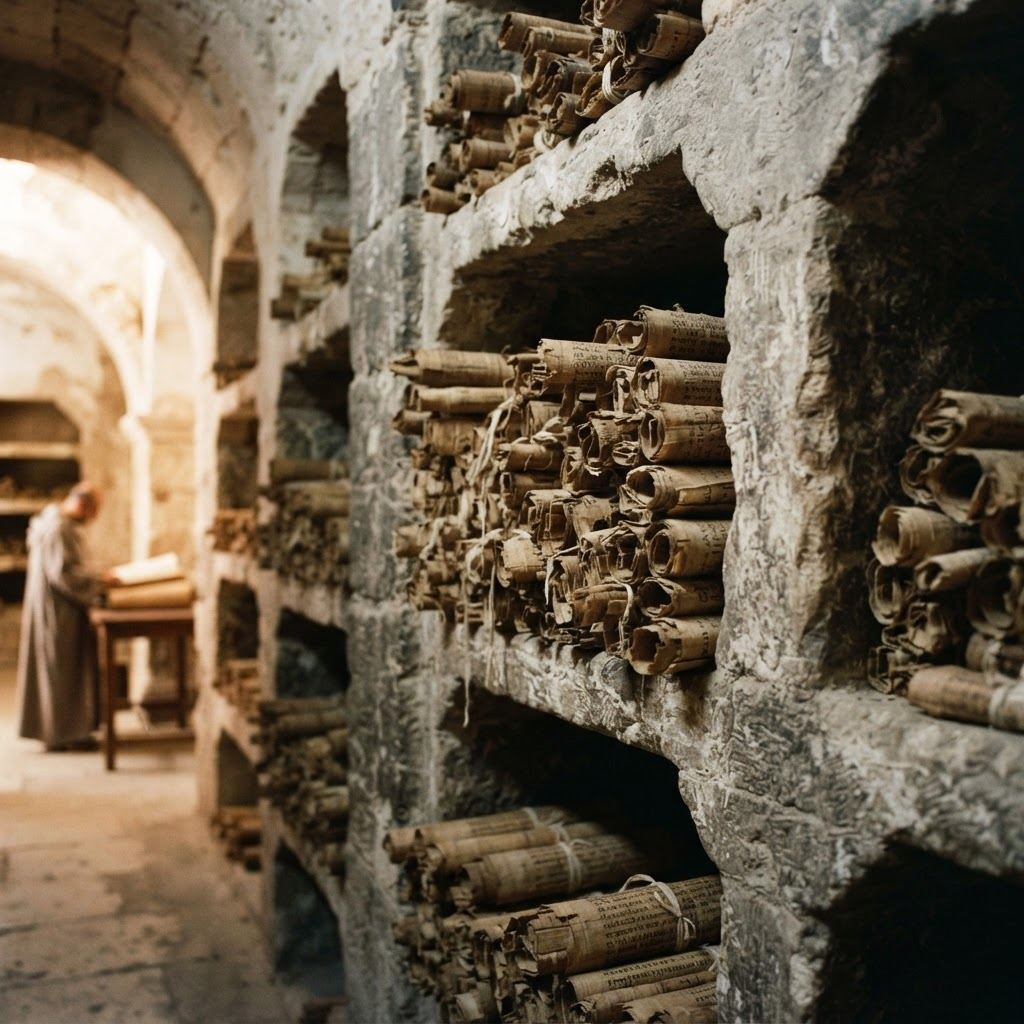
Ancient Alexandria — A Gradual Decline
The Library of Alexandria faded over centuries through funding loss, war, and neglect rather than a single legendary fire. Many of its texts survived in copies elsewhere — the "lost in one night" story is a dramatic myth.
Verified Sources & Peer-Reviewed References
Alexandria: Library of Dreams
Proceedings of the American Philosophical Society·2002The Fate of the Alexandrian Library
Journal of Roman Studies·2005Textual Transmission in Antiquity
Classical Quarterly·2008Manuscript Survival and Loss
Journal of the History of Ideas·2010
All sources are peer-reviewed or from accredited space agencies. Dark Myths does not fabricate or misrepresent scientific findings.