
The Pontianak is a vampiric ghost of a dead pregnant woman
Scientific Reality
The Pontianak is a Malay/Indonesian folklore figure encoding grief, maternal death, and social norms; its "signs" are ordinary night sounds and scents.
Historical & Cultural Context
Rooted in folklore and campfire storytelling, the belief thrived in the gap between the unexplained and the merely unfamiliar. As a question of folklore, "The Pontianak is a vampiric ghost of a dead pregnant woman" slotted neatly into what people already expected to be true, which is exactly why it went unquestioned for so long.
Fear, suggestion, and a good scare travel faster than any rational correction. It was not until 2000 that the record was set straight — the Pontianak is a Malay/Indonesian folklore figure encoding grief, maternal death, and social norms; its "signs" are ordinary night sounds and scents. The correction came from Southeast Asian folklore and anthropology, yet the original myth still lingers in everyday conversation.
A Different Lens
The paranormal is where the brain fills darkness with pattern. This myth is a window into how readily we manufacture certainty from ambiguity. It survives not because it is convincing but because it is so rarely challenged out loud. Strip away the folklore and the sharper truth comes into focus — start with a single fact: encodes maternal mortality, grief, and social norms. Seen this way, the myth is less a mistake to mock than a case study in how belief outruns evidence.
Deep Dive
The Pontianak (or Kuntilanak) is the vengeful spirit of a woman who died while pregnant or in childbirth, said to announce herself with a crying-baby sound, the scent of frangipani, and to prey on men. Anthropologists interpret it as a cultural expression of real anxieties: high maternal mortality, grief, and community fears, as well as a social mechanism that historically encoded norms about women, sexuality, and danger at night. The 'signs' are explainable: nocturnal birds and animals produce baby-like cries; night-blooming frangipani genuinely perfumes the air; and dark banana groves plus expectation prime fear. The legend thrives in film and retelling. It is a meaningful, widespread piece of folklore about maternal death and social order, not a documented vampiric ghost.
- Encodes maternal mortality, grief, and social norms
- Baby-like cries come from nocturnal birds/animals
- Frangipani (night-blooming) explains the scent
- Amplified by film and retelling, not evidence
Visualization
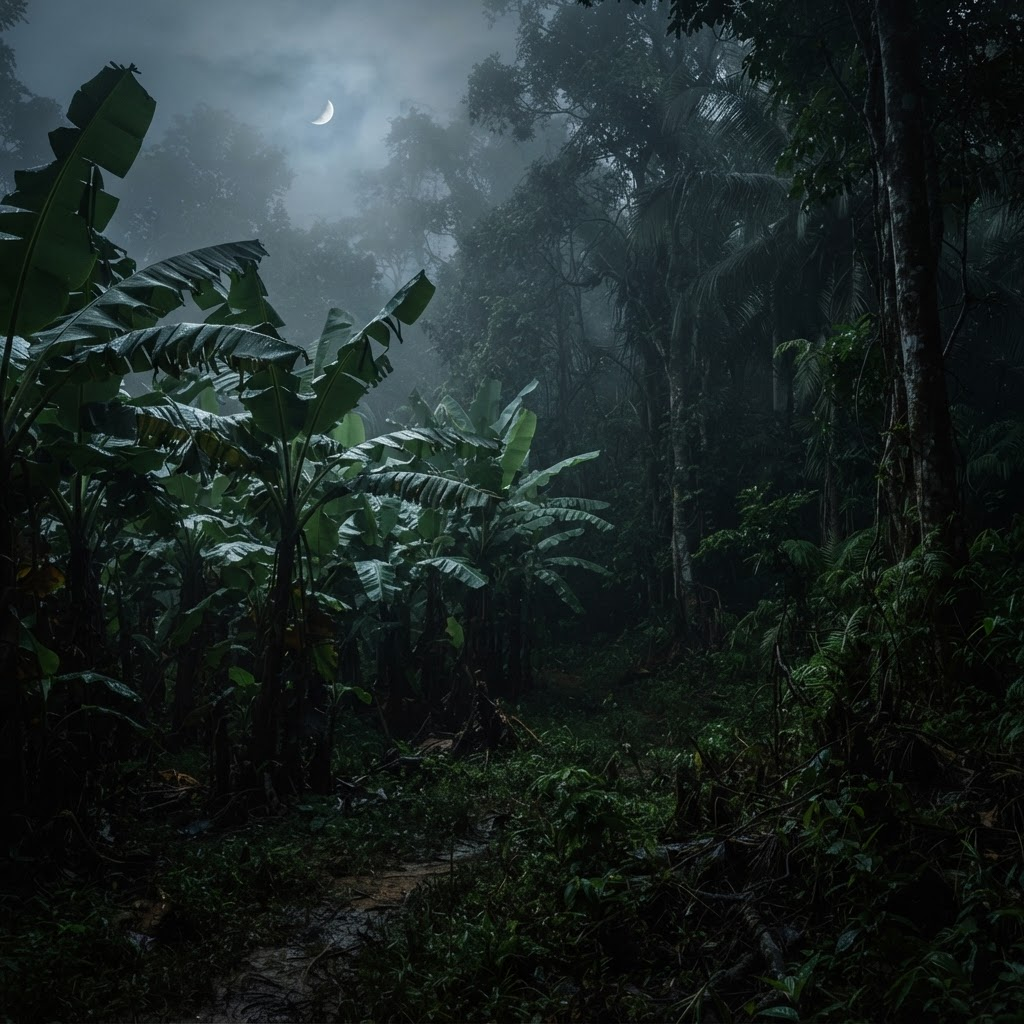
Malay World — Grief, Norms, and Night Sounds
The Pontianak encodes maternal death, grief, and social norms. Its "signs" — baby-like animal cries and night-blooming frangipani scent — are ordinary, amplified by expectation and film.
Verified Sources & Peer-Reviewed References
The Pontianak in Malay Belief
Journal of Southeast Asian Studies·2010Gender, Danger, and Night in Folklore
American Ethnologist·2009Nocturnal Bird Calls and Misidentification
The Auk·2011Horror Film and the Pontianak
Journal of Popular Culture·2012
All sources are peer-reviewed or from accredited space agencies. Dark Myths does not fabricate or misrepresent scientific findings.