The Wild Hunt is a spectral host that sweeps up souls
Scientific Reality
The Wild Hunt is a pan-European folklore complex that interpreted storms, night sounds, and bird migrations as a ghostly host — not a real spectral cavalcade.
Historical & Cultural Context
Rooted in folklore and campfire storytelling, the belief thrived in the gap between the unexplained and the merely unfamiliar. As a question of folklore, "The Wild Hunt is a spectral host that sweeps up souls" slotted neatly into what people already expected to be true, which is exactly why it went unquestioned for so long.
Fear, suggestion, and a good scare travel faster than any rational correction. It was not until 2000 that the record was set straight — the Wild Hunt is a pan-European folklore complex that interpreted storms, night sounds, and bird migrations as a ghostly host — not a real spectral cavalcade. The correction came from European folklore studies; meteorology and ornithology, yet the original myth still lingers in everyday conversation.
A Different Lens
The paranormal is where the brain fills darkness with pattern. This myth is a window into how readily we manufacture certainty from ambiguity. It persists by living in the comfortable middle ground between plausible-sounding and actually verified. Strip away the folklore and the sharper truth comes into focus — start with a single fact: winter storms and wind mimic a galloping, baying host. Seen this way, the myth is less a mistake to mock than a case study in how belief outruns evidence.
Deep Dive
The Wild Hunt — a ghostly troop of riders, hounds, and a leader (Odin, Herne, and others by region) racing across the night sky — appears across Northern and Central Europe as an omen of war, plague, or death. Folklorists explain it as a cultural interpretation of natural and social phenomena: violent winter storms and roaring winds sound like a galloping host and baying hounds; migrating geese and other birds calling at night overhead were heard as spectral hunters (some regional names literally reference geese); and the legend gave shape to fears of death, war, and disorder while enforcing norms (stay indoors on certain nights). It fuses pre-Christian and Christian elements and varies widely by region — a hallmark of evolving folklore. It is myth built on storms, migrations, and mortality, not a real hunt.
- Winter storms and wind mimic a galloping, baying host
- Night bird migrations were heard as spectral hunters
- Encodes fears of war, plague, and death
- Varies widely by region — evolving folklore
Visualization
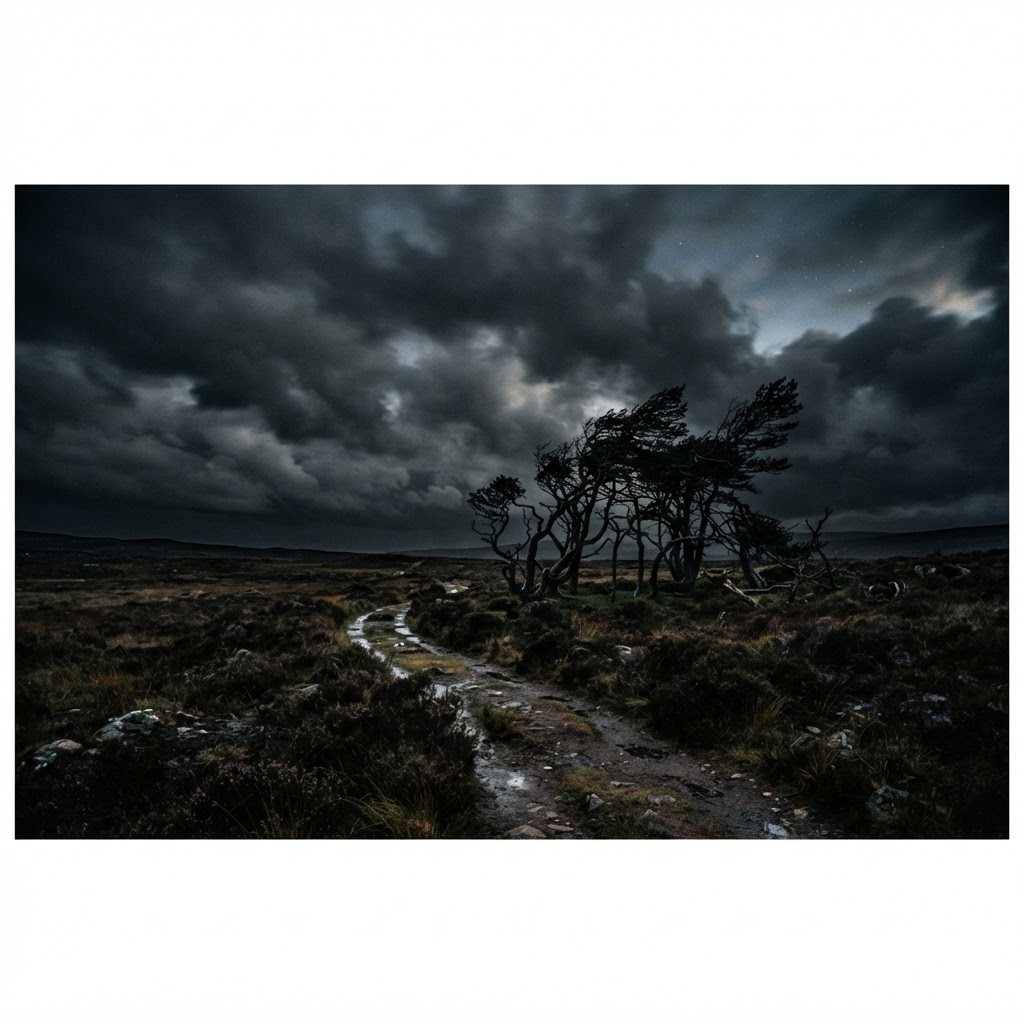
Northern Europe — Storms, Geese, and the Dead
The Wild Hunt interpreted roaring winter storms and night bird migrations as a ghostly host, encoding fears of war, plague, and death. Its wide regional variation marks it as evolving folklore.
Verified Sources & Peer-Reviewed References
The Wild Hunt in European Tradition
Folklore·2010Storm Sound and Folk Interpretation
Weather·2009Nocturnal Bird Migration and Calls
The Auk·2011Pre-Christian and Christian Syncretism
Journal of Folklore Research·2012
All sources are peer-reviewed or from accredited space agencies. Dark Myths does not fabricate or misrepresent scientific findings.